
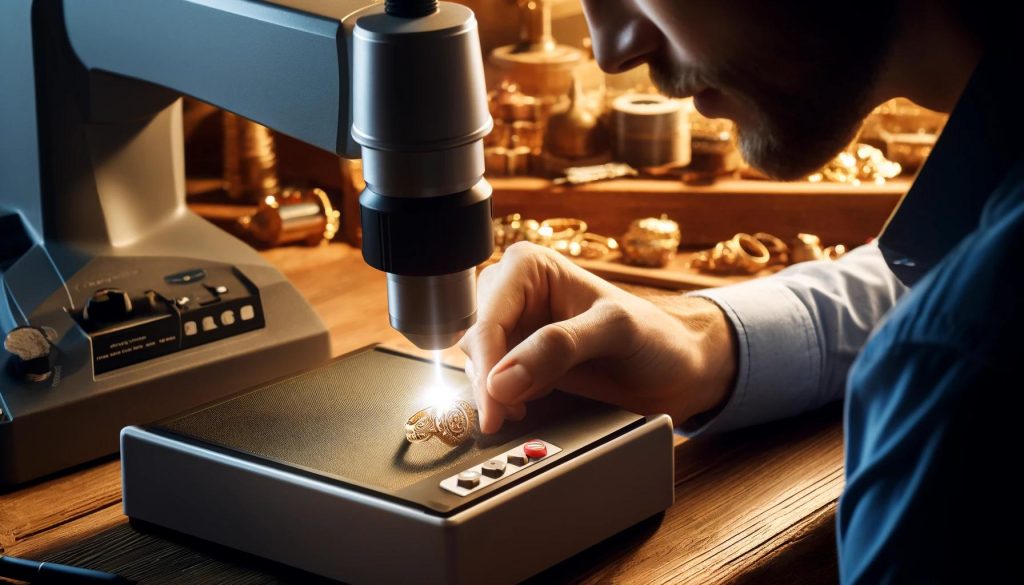
The global jewelry industry is undergoing a precision revolution. As luxury brands compete for shelf distinction and consumer loyalty, the demand for permanent decorative markings has never been higher. Color laser marking for jewelry has emerged as the definitive answer — combining premium branding aesthetics with the reliability of advanced laser technology.
Gone are the days when a simple stamped hallmark or hand-engraved logo sufficed. Modern jewelry buyers expect traceability, personalization, and visual identity baked into every piece. Manufacturers and luxury houses are responding by investing in laser-based marking systems that deliver permanent, damage-free results on gold, silver, platinum, and titanium.
This blog explores what color laser marking is, how it works in a jewelry manufacturing context, its practical applications, and why SLTL’s laser systems are trusted by leading jewelry brands worldwide.
Why Jewelry Brands Are Using Color Laser Marking
Jewelry is not just a product — it is an identity. Every ring, pendant, and bracelet carries the story of its maker. Color laser marking gives brands a powerful, permanent channel to communicate that story directly on the metal surface.
Traditional engraving methods — mechanical stamping, chemical etching, and hand-tooling — come with significant limitations. They lack the resolution needed for intricate logos, cannot produce multi-tone decorative effects, and often risk surface damage on delicate pieces. Laser marking eliminates these constraints entirely.
Key Reasons Jewelry Brands Are Switching to Color Laser Marking
- Brand differentiation through precise, high-contrast logo engraving on every piece
- Luxury aesthetics achieved through controlled oxidation and surface-level color formation
- Premium customization — names, patterns, and QR codes marked without physical contact
- Permanent color marking that resists wear, polishing, and chemical exposure
- Anti-counterfeit identification with microscopic detail unachievable by traditional methods
- Personalized jewelry trends supported by scalable, repeatable marking programs
- Better customer engagement through traceability codes linked to origin, carat, and certificate data
As personalized jewelry demand surges globally, color laser marking is becoming a non-negotiable production capability for any manufacturer targeting the premium and luxury segments.
How Color Laser Marking Works in Jewelry Manufacturing
At its core, color laser marking uses a highly focused laser beam to interact with the metal surface at a microscopic level. The process does not involve inks, dyes, or abrasives — the color is generated by the metal itself reacting to controlled laser energy
The Science of Oxidation-Based Color Formation
When a laser beam hits a metal surface, it transfers thermal energy in nanosecond or picosecond pulses. This controlled heat causes a thin oxide layer to form on the surface. The thickness of this oxide layer determines how light refracts, producing different colors — from gold and blue to purple and green — all without any external pigment.
Heat parameters — pulse width, repetition rate, and scan speed — are precisely programmed for each material and desired color output. This makes the process highly repeatable and suitable for high-volume production runs.
Compatible Jewelry Materials
- Gold (yellow, white, rose) — rich oxidation color range
- Silver — high-contrast monochrome and subtle tonal marking
- Platinum — fine-line precision with deep permanence
- Titanium — exceptional color range due to its natural oxide layer properties
- Stainless steel — ideal for fashion jewelry, watches, and ID components
Color laser marking preserves the premium surface finish of luxury jewelry — no scratches, no material loss, no structural compromise. For jewelry manufacturers seeking to maintain hallmark-quality surfaces, this technology is the gold standard. Explore our range of jewelry laser marking machines built specifically for this precision requirement.
Applications of Color Laser Marking in Jewelry
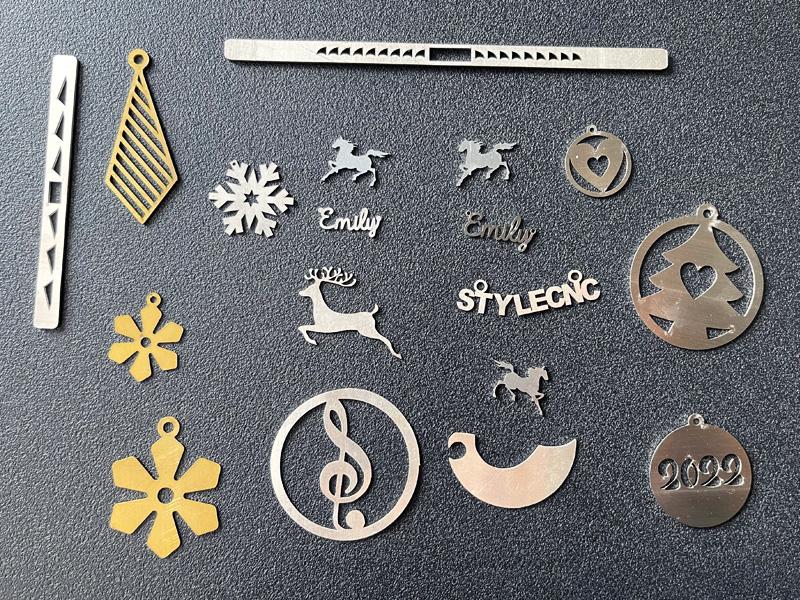
The versatility of color laser marking makes it applicable across virtually every jewelry production segment. From hallmarking compliance to luxury brand engraving, the technology adapts to scale and complexity.
Primary Marking Applications
- Ring Marking — Inner band hallmarking, size codes, and personal engravings with sub-millimeter precision
- Logo Marking — Brand identity marks rendered with photographic clarity on pendants, clasps, and settings
- Name Plate Marking — Custom text and calligraphy on ID bracelets, lockets, and charm pieces
- Decorative Patterns — Geometric, floral, and geometric motifs created in single-pass laser programs
- Personalized Engraving — Customer names, dates, and coordinates on finished pieces
- Hallmarking — BIS, BAAB, and international hallmark codes marked to compliance standards
- QR Code Engraving — Scannable product authentication codes linked to certificates of authenticity
- Brand Identity Engraving — Consistent, production-run brand marks across entire product lines
Integration with Cutting and Welding Technologies
Modern jewelry production doesn’t rely on a single process. Color laser marking works alongside laser cutting and laser welding to create fully integrated manufacturing workflows.
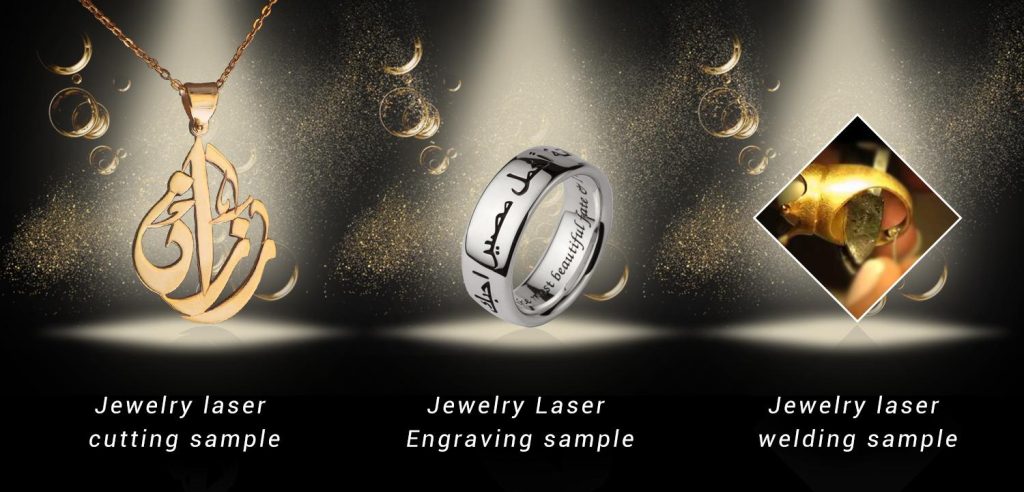
For example, fine welding samples demonstrate how laser welding assembles delicate settings without solder — and the same workpiece then receives color laser markings for brand identity. To understand how welding improves overall production quality, read our detailed guide on How Laser Welding Improves Jewelry Repair and Production Quality — an essential read for any production manager evaluating integrated laser solutions.
Color marking samples on ring shanks, name plates, and logo components produced in a single automated session represent the new benchmark for precision jewelry manufacturing. Cutting, welding, and marking technologies working in sequence reduce handling time, eliminate alignment errors, and accelerate output.
Benefits of Color Laser Marking for Jewelry Brands
Investing in color laser marking technology delivers measurable benefits across production quality, brand equity, and operational efficiency.
- High-resolution marks with consistent color quality elevate product presentation and shelf appeal. Premium Appearance:
- Every piece becomes a branded asset — logo, certification mark, and personalization applied in one process. Better Branding:
- Oxide-based marks are bonded to the metal — they resist polishing compounds, moisture, and everyday wear. Permanent Results:
- Marks as fine as 0.02mm are achievable, enabling complexity impossible with mechanical tools. High Precision:
- Automated laser programs mark hundreds of pieces per hour, reducing labor time significantly. Faster Production:
- Non-contact processing preserves surface quality — no tool marks, no pressure points. Minimal Material Damage:
- Design files are digitally stored and instantly switchable for different SKUs or client orders. Better Customization Capability:
- Every mark is identical to program specifications, eliminating the human variation of manual engraving. Improved Production Consistency:
Luxury brands particularly benefit from the combination of aesthetic quality and production scalability. Learn more about advanced laser engraving solutions designed for the premium jewelry segment.
SLTL Laser Marking Machines for Jewelry Manufacturing
SLTL Group engineers laser marking systems purpose-built for the demanding requirements of jewelry production. From traceability marking to decorative color engraving, each machine in the SLTL range is optimized for a specific production context.
| Machine | Laser Type | Power | Best Application |
| REX | Diode Laser | — | Traceability marking |
| ELITE | Fiber Laser | — | Hallmarking applications |
| Flexy | Diode Laser (Movable) | — | Marking difficult jewelry parts |
| NEO | Fiber Laser | 20–60W | Multipurpose high-power marking |
| Ultra | Fiber Laser | 20–120W | Precision low-power marking |
| OptiFly | CO2 Laser | — | Plastic marking / mass production |
| Carbon | CO2 Laser | — | CO2-based marking applications |
Each SLTL machine supports the full spectrum of jewelry marking needs:
- REX (Diode Laser): Compact traceability marking for inner-band codes, batch numbers, and certification marks. Ideal for hallmarking centers processing high volumes.
- ELITE (Fiber Laser): The hallmarking specialist. Delivers BIS-compliant marks with edge-perfect clarity on gold, silver, and platinum pieces.
- Flexy (Movable Diode Laser): The field-flexible solution. Its movable arm configuration reaches awkward geometries — bangles, chain clasps, and three-dimensional statement pieces.
- NEO (Fiber 20–60W): The production workhorse. High-power fiber output handles multipurpose marking tasks including deep logo engraving and decorative pattern programs.
- Ultra (Fiber 20–120W): Precision low-power applications — fine-line branding, color marking on titanium, and delicate surface treatments on white gold.
- OptiFly (CO2): Built for mass production runs involving plastic components — packaging, display tags, and resin jewelry elements.
- Carbon (CO2): CO2-based marking for non-metallic surfaces in mixed-material jewelry and branded accessories.
For manufacturers evaluating system specifications and integration options, explore the full industrial laser marking systems portfolio available from SLTL.
Upgrade Your Jewelry Manufacturing with SLTL Laser Technology
SLTL Group offers a complete range of laser solutions — marking, cutting, and welding — designed to meet the production standards of the world’s most demanding jewelry manufacturers.
Why partner with SLTL:
✦ Premium-quality marking with production-grade consistency
✦ Luxury finish preservation — non-contact processing on all precious metals
✦ Faster throughput with automated marking programs for high-volume runs
✦ Precision branding capability — logos, QR codes, and color marks in a single pass
✦ Smart manufacturing integration — marking, cutting, and welding in unified workflows
✦ Better customization with instant design file switching for custom orders
✦ Permanent engraving quality backed by SLTL’s engineering expertise
Contact SLTL today to discuss your jewelry marking requirements and schedule a live machine demonstration.
Frequently Asked Questions
1. How much does a jewelry color laser marking machine cost?
Pricing for SLTL jewelry laser marking machines varies by system type, power output, and configuration. Entry-level diode systems like the REX are competitively priced for hallmarking centers and small workshops. Fiber laser systems like the NEO and Ultra are investment-grade machines for production environments. Contact SLTL for a quote tailored to your volume and material requirements.
2. Which metals can be marked using color laser marking technology?
Color laser marking is compatible with gold (all alloys), silver, platinum, titanium, stainless steel, and most engineering metals used in jewelry manufacturing. Titanium produces the widest natural color palette due to its reactive oxide layer. Parameters are adjusted per material to achieve optimal color and depth.
3. Is laser-marked jewelry branding permanent?
Yes. Oxide-based laser marks are integrated into the metal surface at a molecular level. They resist polishing agents, moisture, chemical exposure, and everyday wear. Unlike inkjet or pad-printed marks, laser marks do not fade, peel, or require protective coatings.
4. Can color laser marking be used for luxury and high-end jewelry?
absolutely. Color laser marking is the preferred technology for luxury jewelry brands precisely because it preserves the original surface finish. The non-contact process eliminates mechanical stress on delicate settings, thin bands, and polished surfaces. Premium brands use it for logo marking, hallmarking, and personalization on their highest-value pieces.
5. How fast can a laser be marking machine process jewelry in production?
Production speed depends on mark complexity, material, and machine specifications. High-power fiber laser systems like the SLTL NEO can process hundreds of pieces per hour for simple hallmarks or serial codes. Multi-color decorative engraving takes longer per piece but remains significantly faster than manual or mechanical alternatives — with zero variability between pieces.
Conclusion
Color laser marking jewelry is no longer an emerging technology — it is the new production standard for brands that take quality, identity, and traceability seriously.
Whether you are hallmarking gold bangles to regulatory compliance, engraving your brand logo on a platinum pendant, or producing personalized anniversary rings at scale, laser marking delivers results that no traditional method can match. The permanence, precision, and flexibility of the technology translate directly into brand equity, production efficiency, and customer satisfaction.
As the jewelry industry moves toward smarter, faster, and more integrated manufacturing, the combination of laser cutting, laser welding, and color laser marking will define the competitive edge. Manufacturers who invest in this integrated approach today are positioning themselves as the premium producers of tomorrow.
SLTL Group’s portfolio — from the hallmarking-focused ELITE to the multi-application NEO and precision Ultra — provides a complete technology pathway for every jewelry production scenario.
The future of jewelry manufacturing is laser driven. The question is not whether to adopt it — but which system best fits your production goals.

