
Jewelry manufacturing and repair have always demanded a level of precision that pushes conventional tools to their limits. Working with gold, silver, platinum, and delicate gemstone settings leaves almost no margin for heat damage, dimensional error, or surface contamination. For decades, jewelers relied on soldering torches and traditional flame-based techniques to join metal — methods that work, but carry real risks: heat spread, oxidation, solder discolorations, and the constant possibility of damaging stones or fine surface finishes that cannot be undone.
That is changing. Across jewelry workshops, production houses, and luxury brand manufacturers, the laser welding machine for jewelry is becoming the standard tool for precision joining — not as a replacement for all traditional methods, but as the superior solution for the applications where accuracy, material sensitivity, and finish quality matter most.
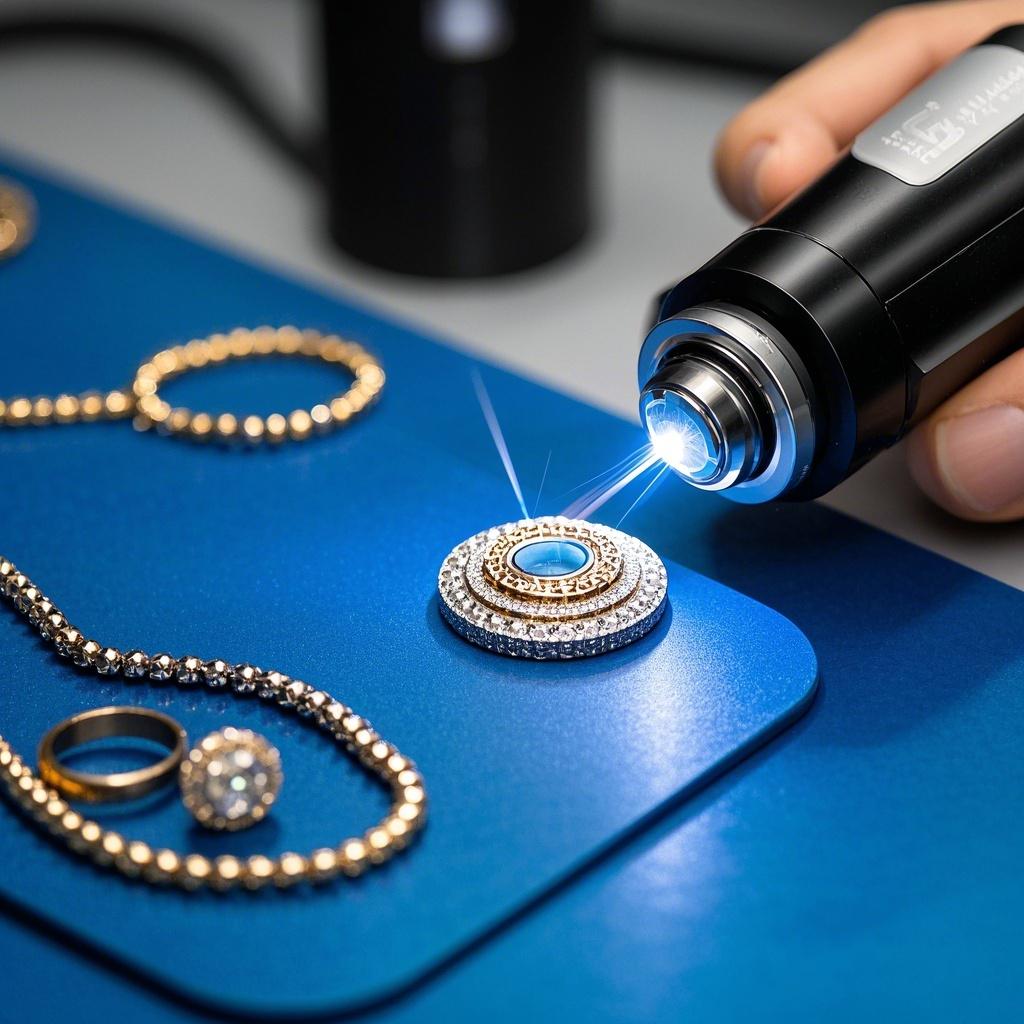
Laser welding focuses on an intense pulse of light energy onto an area smaller than a millimeter, generating the heat needed to fuse metal precisely where it is needed and nowhere else. The result is a clean weld, minimal heat spread, no flux required, and no risk to adjacent stones or delicate surface treatments. For repair work on high-value pieces, that control is invaluable. To produce fine jewelry at scale, it is transformative.
This blog covers the full picture — from why conventional soldering falls short on sensitive jewelry applications, to how laser welding works in practice on gold, silver, and platinum. It explores where laser marking adds traceability and branding value, how laser cutting enables complex component design, and which SLTL laser solutions are the right fit for jewelry workshops, production houses, and luxury manufacturers at every scale.
Whether you run a single-bench repair workshop or a multi-line jewelry production facility, understanding what laser processing can do — and what to look for when specifying equipment — is the starting point for making the right investment decision.
The Precision Problem in Jewelry Manufacturing and Repair
Jewelry is one of the few manufacturing categories where the material is precious, the geometry is intricate, the customer expectation is perfection, and the margin for error is essentially zero.
A ring shank repair that leaves a heat discolorations mark on the gold surface is not a successful repair — it is a new problem. A production weld on a pendant bail that shifts the setting geometry by 0.2 mm creates a fit problem downstream. A hallmarking mark applied with inconsistent depth looks unprofessional on a luxury piece. A clasping mechanism soldered with excess heat risks the integrity of the surrounding metalwork.
These are not edge cases. They are daily realities in jewelry production and repair environments using conventional tools.
The core limitations of conventional approaches come down to four problems:
Heat Control — The Fundamental Challenge of Flame-Based Joining
A soldering torch delivers heat to a broad area. Even a skilled jeweler using a fine flame tip is working with a heat source that affects a zone measured in centimeters, not fractions of a millimeter. On a delicate ring shank, a complex pendant assembly, or a piece with mounted gemstones, that heat spread is a constant risk.
The consequences of excess heat in jewelry work include discolorations and oxidation of gold and silver surfaces, thermal shock to mounted stones, softening of prongs and settings, distortion of fine wire and filigree work, and — in worst cases — cracking of heat-sensitive stones like emeralds, opals, or treated stones.
Managing this requires the jeweler to apply heat sinks, protective compounds, and careful torch control. It works in skilled hands, but it introduces variability and adds preparation time to every repair job.
Solder Contamination and Color Matching
Traditional soldering introduces solder alloys into the joint. For gold jewelry, this means selecting a solder with the correct karat and color match — yellow gold solder on yellow gold, white on white, rose on rose. An imperfect color match creates a visible seam at the joint, which is unacceptable on fine jewelry.
Solder also changes the metallurgical composition at the joint. On high-karat gold pieces, this can affect the hallmarking status of the repaired section. On pieces destined for precious metal assay, it complicates the material accounting.
Limited Access on Complex Geometries
A soldering torch requires line-of-sight access to the joint area and enough clearance to manoeuvre the flame. On complex ring assemblies, multi-element pendants, or chain repairs, this access is often limited. Certain repairs are simply difficult — or impossible — to execute cleanly with a torch because the geometry does not allow the flame to reach the joint without heating surrounding elements.
Inconsistency at Scale
In production environments, torch-based soldering introduces operator-to-operator variability that is difficult to control. Joint quality depends heavily on the individual jeweler’s technique, experience, and attention on a given day. For luxury brands producing consistent product quality across multiple production staff and shifts, this variability is a real quality control challenge.
How Laser Welding Works — and Why It Changes Everything
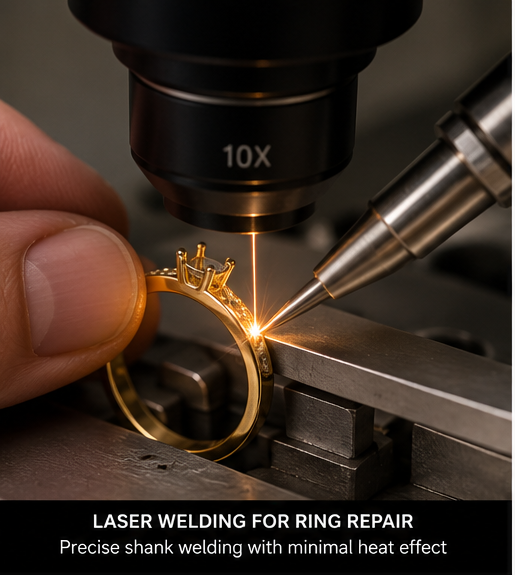
A laser welding machine for jewelry operates on a fundamentally different principle from flame-based joining. Instead of generating a broad heat field from a combustion source, it focuses on a precisely controlled pulse of laser light onto a spot typically 0.1–0.5 mm in diameter at the workpiece surface.
The energy in that pulse is absorbed by the metal surface and converted to heat — but only at and immediately around the focal point. The surrounding metal, mounted stones, and surface treatments are largely unaffected. The heat-affected zone in laser welding is measured in fractions of a millimeter, not the centimeters associated with torch work.
The practical implications for jewelry work are significant:
No flux is required. Laser welding in a shielding gas environment (typically argon or nitrogen) eliminates the oxidation that requires flux in torch soldering. No flux means no residue to clean, no risk of flux damage to surface finishes, and a cleaner joint.
No added solder alloy in many applications. For many jewelry repair and joining applications, laser welding fuses the base metal directly — no filler metal is added. Where filler is needed, it is wire-fed in the same base metal alloy, eliminating colour-match problems entirely.
Precision access to tight geometries. The laser beam is delivered through a microscope-assisted viewing system, giving the operator magnified visibility of the joint area and precise beam placement even on complex, multi-element assemblies. Areas that a torch cannot reach safely can be welded under laser with full control.
Consistent, repeatable results. Laser pulse parameters — energy, pulse duration, frequency, spot size — are set digitally and remain constant across every weld in a production run. The result is the same on the tenth piece as on the first, regardless of which operator is running the machine.
For a direct comparison of what this means in practice versus traditional soldering — covering joint strength, heat management, material compatibility, and production economics — the article Laser Welding vs Soldering for Jewelry Manufacturing provides a detailed side-by-side analysis that is worth reading before making any equipment decision.
Laser Welding Applications in Jewelry: Where It Delivers Most
Ring Repair and Shank Welding
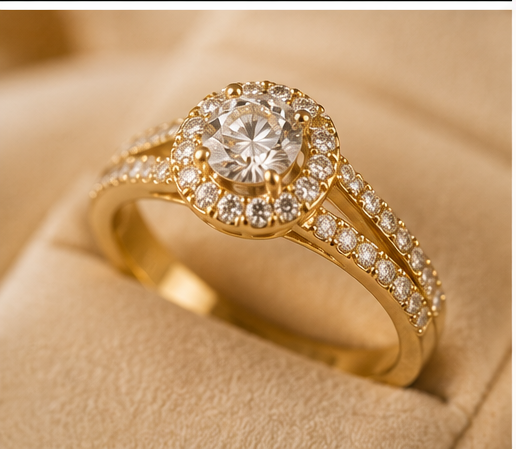
Ring repair is the highest-frequency application in most jewelry workshops. Shank repairs, sizing cuts, crack repairs, and prong retipping are daily work — and they are exactly the applications where laser welding outperforms torch work most clearly.
A cracked ring shank can be laser welded without removing the stones, without applying heat sinks, and without any risk to the surface finish of the ring face. The weld is clean, minimal, and blends seamlessly with the surrounding metal after light polishing. What takes 20–30 minutes of torch preparation, execution, and cleanup can be completed in 3–5 minutes under laser.
For prong retipping — adding metal to worn or broken prongs without heating the stone setting — laser welding is the only practical method for many stone types. Torch work on a mounted emerald, opal, or treated stone carries significant risk. Laser welding isolates the heat to the prong tip and leaves the stone unaffected.
Chain and Clasp Repair
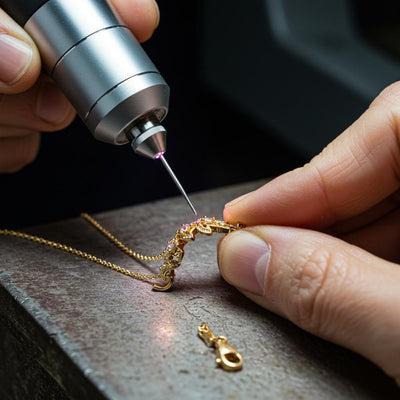
Chain link repairs and clasp joining are applications that challenge torch technique significantly — the small scale, tight geometry, and proximity of adjacent links make heat control difficult. Under laser, the operator works through a microscope with full magnification of the joint area, placing the weld precisely on the link junction without affecting neighbouring links.
The result is a seamless repair that is structurally sound and visually undetectable after polishing.
Bail and Finding Attachment
Attaching bails, jump rings, ear posts, and other findings to pendants and earrings requires a clean, strong joint at a very small contact area. Under torch, achieving full penetration at a small finding without overheating the surrounding piece requires significant skill. Under laser, the beam is placed precisely at the joint; pulse energy is calibrated to the metal thickness, and the joint forms cleanly without affecting adjacent areas.
Production Welding — Consistent Quality at Volume
In jewelry production environments — assembling components for rings, bracelets, necklaces, and earrings at volume — laser welding replaces torch soldering for the critical joins that require consistent quality. Production weld parameters are set once, saved, and recalled for each joint type. Every piece comes off the line with the same joint quality, regardless of production rate or operator.
For manufacturers specifically looking to identify the right laser welding system for their production volumes and metal types, the guide Which Laser Welding Machine Is Right for Jewelry Workshops? covers the key specification criteria in practical detail.
Laser Marking in Jewelry — Traceability, Hallmarking, and Branding
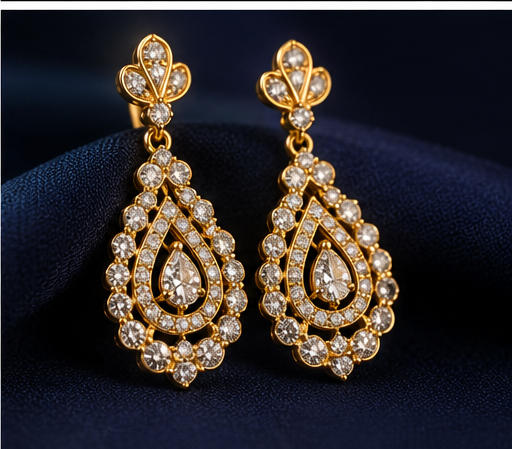
Welding is only part of what laser technology brings to jewelry manufacturing. Laser marking has become an essential tool for jewelry brands at every level — from individual hallmarking compliance to luxury brand logo application and premium color marking on high-value pieces.
Hallmarking and Traceability Marking
Jewelry hallmarking — the permanent application of purity marks, maker marks, and assay office identification — has traditionally been done by hand stamping. Hand stamping works, but it applies mechanical force that can distort fine jewelry, and the depth and consistency of the mark varies with operator technique.
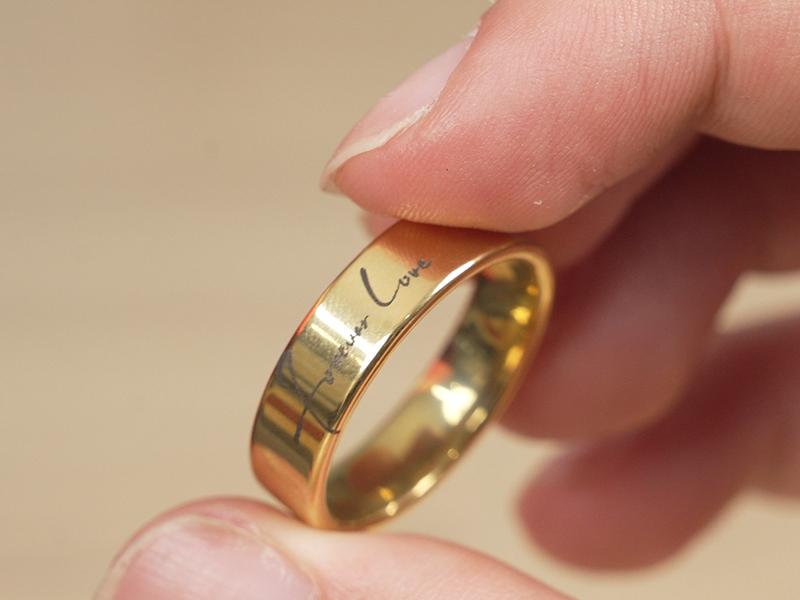
Laser marking applies to hallmarks, serial numbers, and Data Matrix for traceability codes without mechanical contact and without distortion. The mark depth and position are set digitally and reproduced consistently on every piece. For brands managing component-level traceability — knowing exactly which production batch, which metal lot, and which operator produced each individual piece — laser marking at the component level is the enabling technology.
The strategic importance of laser marking for jewelry brand identity and supply chain traceability is explored in depth in. Why Jewelry Brands Use Laser Marking for Logos and Traceability. For buyers evaluating marking equipment specific to rings, pendants, and small components, the practical guide. How to Choose a Laser Marking Machine for Rings, Pendants and Small Parts covers the specification criteria that determine whether a given machine can handle the scale, geometry, and throughput of specific production requirements.
The full range of machine options for jewelry logo and hallmarking applications is covered in Laser Marking Machine for Jewelry Logo and Hallmarking.
Logo and Brand Marking
Laser marking applies brand logos, designer signatures, and collection marks with precision and consistency that hand engraving cannot match at production volumes. The mark is digitally programmed — the same geometry, the same depth, the same position on every piece in the production run.
For brands with complex logo artwork or fine-line design elements, laser marking reproduces detail that mechanical engraving tools cannot hold at small scales. A logo that is 3 mm across can be applied with sub-millimeter line accuracy, cleanly readable under magnification.
Color Laser Marking — Adding Visual Value to Precious Metals
Beyond functional traceability, laser marking can create permanent color effects on certain metals — particularly stainless steel and titanium — through a controlled surface oxidation process. These color marks are permanent, chemical-resistant, and visually striking: full-spectrum colors including deep blues, gold, purples, and reds can be applied without any ink, coating, or chemical.
For jewelry designers working with stainless steel or titanium alongside precious metals, color laser marking opens design possibilities that conventional surface treatments cannot replicate — logo backgrounds, decorative insets, and bespoke color designs applied with the same precision as functional marks.
The technology behind this process is explained in. What Is Color Laser Marking and How Can It Add Value to Jewelry? and the practical comparison between color marking and traditional engraving for branding purposes is the subject of Color Marking vs Engraving for Jewelry Branding.
For production environments requiring a dedicated color marking platform for premium product lines, Color Laser Marking Machine for Premium Jewelry Branding covers the equipment options and process parameters specific to jewelry color marking applications.
For buyers who need to understand the difference between color marking and the more standard black or white annealing marks used for hallmarking and traceability, Black and White Laser Marking for Jewelry: Basic Guide for Buyers provides a clear technical foundation without assuming prior laser knowledge.
Laser Cutting in Jewelry — From Sheet Metal to Fine Components
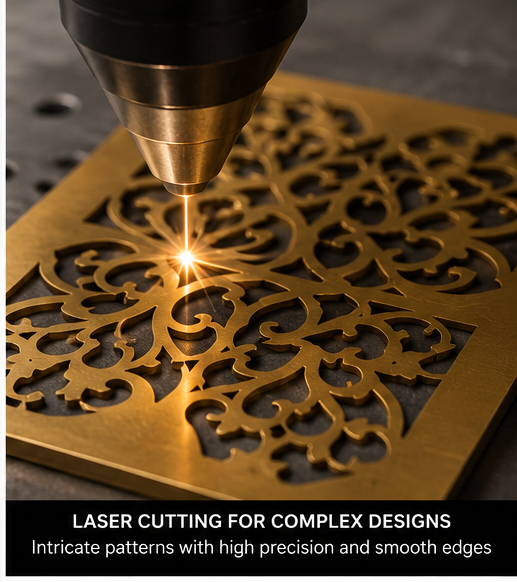
Laser welding and marking are the primary laser applications in jewelry, but laser cutting plays an increasingly important role — particularly for design studios, production houses producing complex component geometries, and manufacturers working with sheet metal to create pendants, earrings, and structural elements.
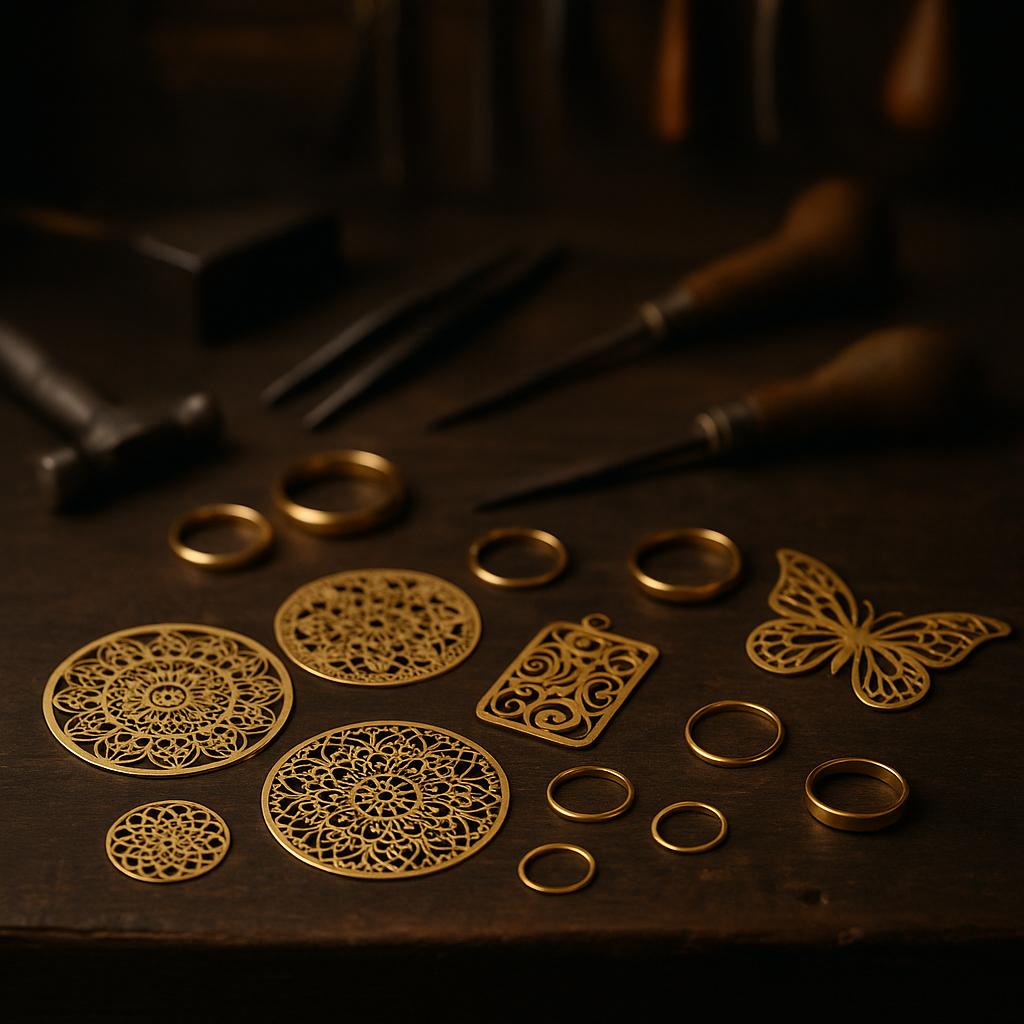
Laser cutting on jewelry-grade metals — 0.3 mm to 3 mm gold, silver, platinum, and stainless sheet — produces clean, fine-kerf cuts with smooth edges that require minimal post-processing. The cut geometry is digitally programmed, which means complex filigree patterns; precise geometric shapes, and intricate design cutouts are reproducible without any tooling.
For design studios prototyping new collections, laser cutting eliminates the tooling cost and lead time of traditional die cutting. For production houses running established designs, it delivers consistency and repeatability that hand-cutting and mechanical punching cannot match fine tolerances.
The full scope of what laser cutting can deliver for jewelry component production is explored in, How Laser Cutting Helps Make Fine Jewelry Components. For buyers who need to understand which materials and thicknesses a jewelry laser cutting machine can handle in practice, Laser Cutting Machine for Jewelry: What Thickness and Materials Can It Handle? provides the technical reference. For design studios considering laser cutting as part of their production toolkit, Laser Cutting Machine for Jewelry Design Studios covers the platform options and workflow integration considerations specific to studio environments.
SLTL Laser Solutions for Jewelry Manufacturers and Workshops
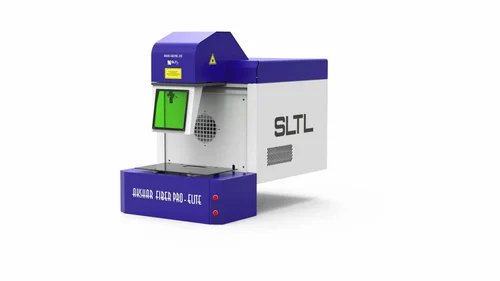
SLTL Group offers a complete range of laser processing solutions covering every jewelry application — from fine welding on precious metals to logo marking, color marking, hallmarking, and component cutting. For workshops setting up laser processing for the first time, the Jewelry Laser Machine Setup Guide for Cutting, Welding and Marking provide a practical overview of what integration looks like in a real workshop environment.
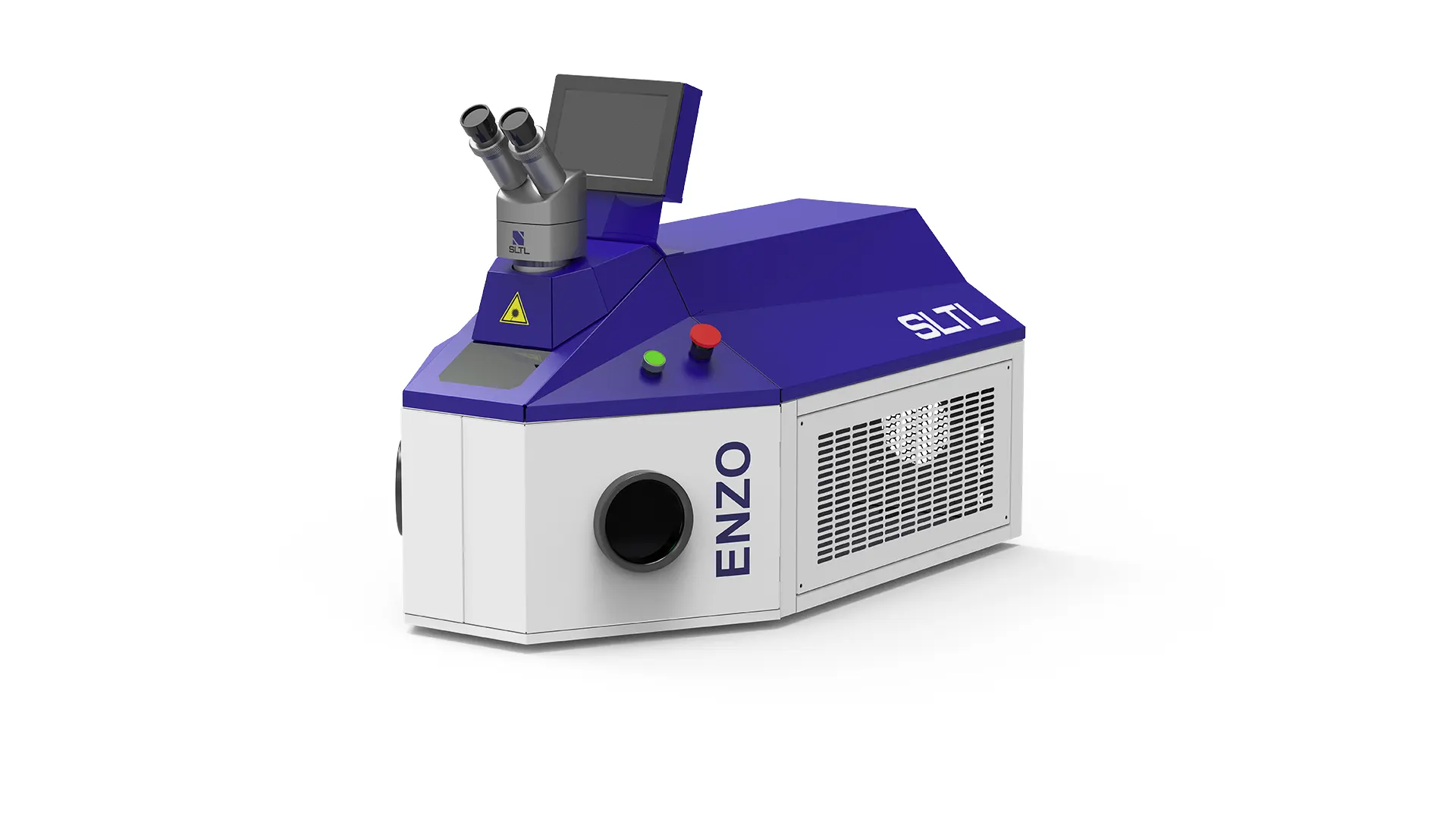
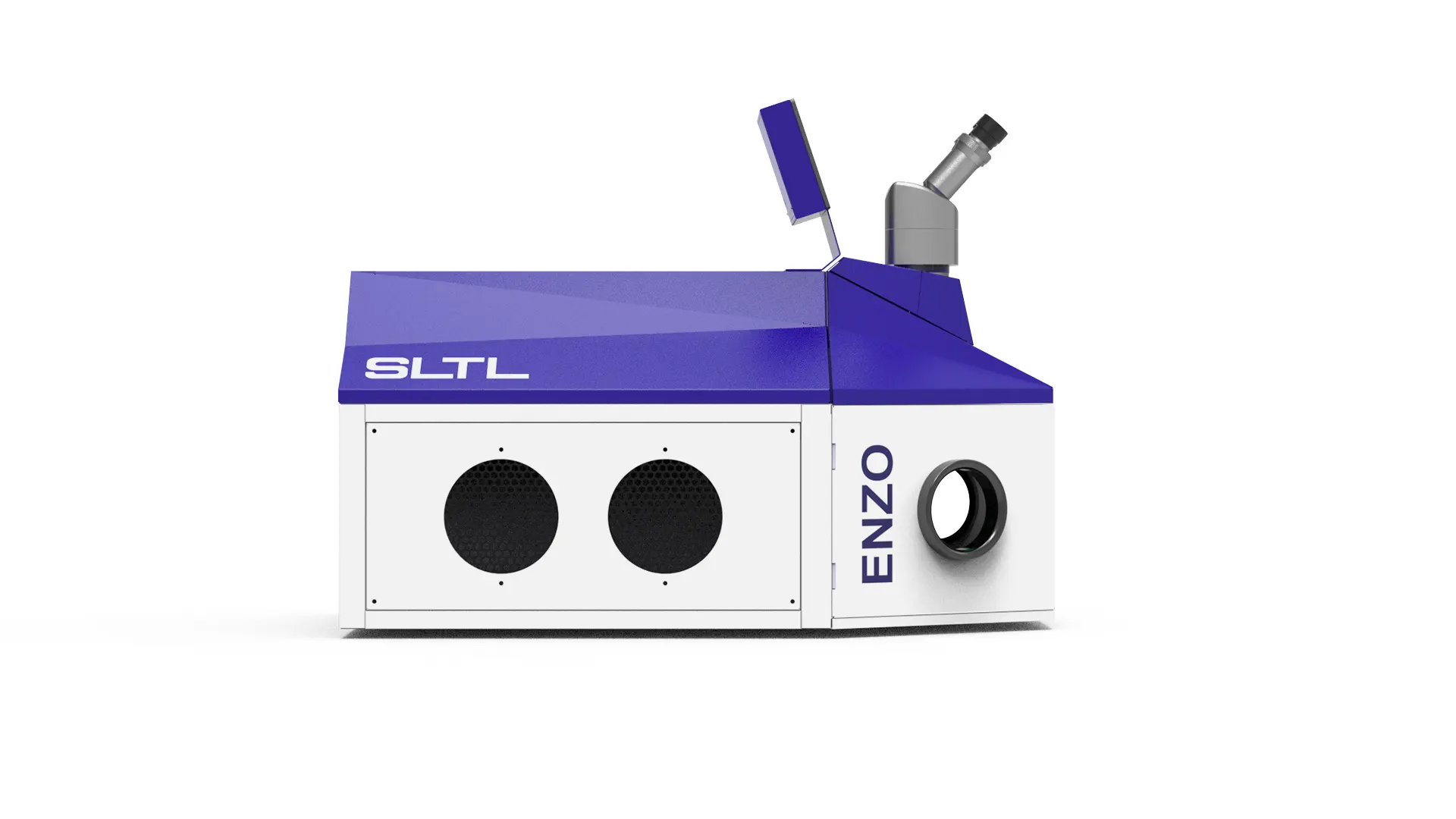
ENZO — Jewelry Laser Welding Machine (up to 200W)
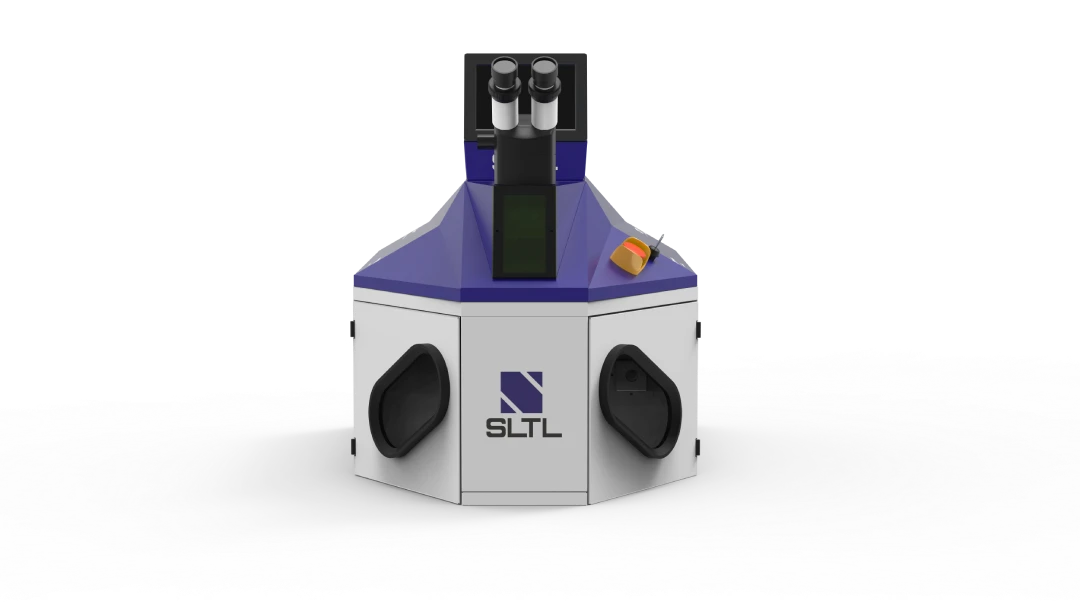
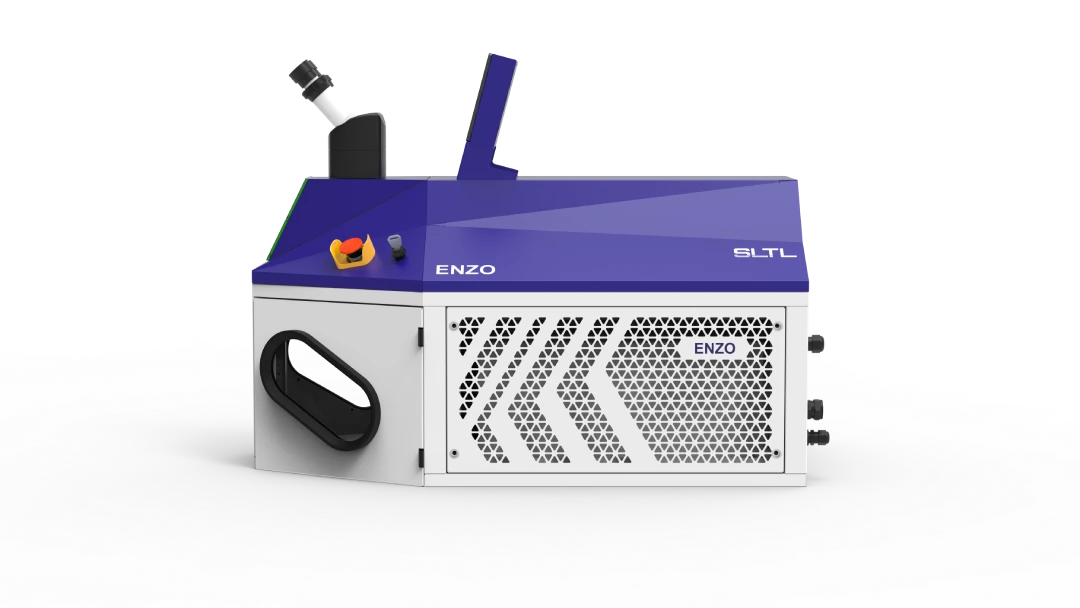
The ENZO is SLTL’s dedicated jewelry welding machine, specifically designed for gold welding, silver welding, and precision jewelry repair. At up to 200W, it delivers the pulse control and spot precision that fine jewelry work demands — clean welds on ring shanks, prong retipping, chain repairs, bail attachment, and production joining on precious metal components.
The ENZO is built around a microscope-assisted viewing system that gives operators magnified visibility of the weld area, precise beam placement on complex assemblies, and the ability to work safely on mounted stones without risk of thermal damage. For workshops and production houses where jewelry welding is the primary application, the ENZO is purpose-built for the job.
Detailed specifications and application guidance are available in Best Laser Welding Machine for Jewelry Manufacturers.
Nova — Fully Customized Laser Welding Machine (200–500W)
The Nova covers the higher power range with full customization options, making it the right choice for jewelry manufacturers with specific production configurations — bespoke fixture requirements, integration into production lines, or welding applications that demand higher power for thicker materials or faster cycle times. The Nova’s customization flexibility means it can be specified precisely for the production environment it will operate in, rather than adapting the production environment to a fixed machine specification.
Hertz — Handheld Laser Welding Machine
The Hertz brings laser welding capability to repair work and applications where the workpiece cannot be brought to a fixed welding station. Its handheld configuration allows the operator to bring the laser to the piece — useful for large assemblies, on-bench repair work, and workshop environments where flexibility and portability matter as much as precision.
Future X — Advanced Laser Cutting Machine
SLTL’s most advanced laser cutting platform, equipped with every modern feature for precision cutting on jewelry metals and fine components. Future X is the right choice for production houses that demand maximum capability — complex geometries, tight tolerances, and the competitive edge that the most advanced cutting technology can deliver on jewelry-grade precious metal sheet.
IntegreX — Affordable Laser Cutting Machine
For jewelry manufacturers and design studios looking to add laser cutting capability without the capital cost of a top-tier system, the IntegreX is SLTL’s most accessible cutting platform. It delivers genuine production capability on jewelry-grade sheet thicknesses — gold, silver, stainless, and platinum — at a price point that makes laser cutting practical for workshops and smaller production houses.
X5 — 3D Laser Cutting Machine
For jewelry applications involving three-dimensional cutting on formed components or complex curved surfaces, the X5 handles geometries that flat-bed machines cannot reach. It is the specialist tool for 3D cutting requirements in jewelry production where standard flat-plane cutting is not sufficient.
Frequently Asked Questions
Q: Can laser welding be used on all types of jewelry metals — gold, silver, and platinum?
Yes. Laser welding works on all precious jewelry metals including yellow gold, white gold, rose gold, silver, platinum, and palladium. Pulse parameters are adjusted for each metal’s reflectivity and thermal characteristics. Gold and platinum are particularly well-suited to laser welding due to their thermal properties and high absorption of laser energy at the relevant wavelengths.
Q: Will laser welding damage mounted gemstones?
When performed correctly, laser welding does not damage gemstones. The heat-affected zone is extremely small and localized to the weld point. However, heat-sensitive stones — emeralds, opals, treated stones, and certain synthetics — require careful beam placement. The microscope viewing system on a jewelry laser welder allows precise positioning to avoid any stone proximity.
Q: What is the difference between the ENZO and the Nova for jewelry welding?
The ENZO (up to 200W) is designed specifically for jewelry welding — gold, silver, and fine precious metal work at standard jewelry thicknesses. The Nova (200–500W) covers higher power requirements and is fully customizable for specific production configurations. For most jewelry workshops and repair studios, the ENZO is the right starting point. The Nova suits manufacturers with specific higher-power or custom integration requirements.
Q: Is laser marking permanently on jewelry?
Yes. Laser marks are formed by a permanent change in the surface microstructure of the metal — not by surface coatings, inks, or mechanical deformation. They do not fade, wear off, or change colour under normal jewelry use conditions, including exposure to cleaning chemicals, perspiration, ultrasonic cleaning, and polishing.
Q: Can laser cutting produce filigree and complex design cutouts on gold sheet?
Yes. Laser cutting on gold and silver sheet produces fine-kerf cuts with smooth edges on complex geometries — including filigree patterns, geometric cutouts, and intricate design elements that would be impractical to cut mechanically. The cut geometry is fully digitally controlled and reproducible across an entire production run without any tooling.
Q: What is colour laser marking and is it suitable for precious metals?
Colour laser marking uses controlled laser oxidation to produce permanent colour effects on metal surfaces. It works particularly well on stainless steel and titanium, producing a full spectrum of colors without ink or coating. Traditional precious metals — gold, silver, platinum — standard laser marking produces high-contrast black or white annealing marks used for hallmarking and traceability rather than colour effects.
Q: How does laser welding compare to soldering for production jewelry manufacturing?
Laser welding is faster per joint on most fine jewelry joining applications, produces no flux residue, eliminates colour-match problems associated with solder alloy, and delivers consistent results regardless of operator. Soldering remains practical for certain high-volume simple joins where torch technique is well established. For fine work, repair, and quality-critical production joins, laser welding consistently outperforms torch soldering on quality, speed, and repeatability.
Q: What should a jewelry workshop consider when setting up a laser system for the first time?
Key considerations include the primary application (repair welding, production welding, marking, or cutting), the metal types and thicknesses involved, workspace ventilation requirements, and operator training. The Jewelry Laser Machine Setup Guide for Cutting, Welding and Marking covers the practical setup considerations specific to jewelry workshop environments from machine placement through to first production use.
SLTL Group — Laser Welding, Cutting and Marking Solutions for Jewelry Manufacturing Contact SLTL to request sample welds on your specific metal, discuss your production application, or identify the right machine for your workshop or production environment. Explore SLTL Laser SolutionsA