

Green shipbuilding refers to the integration of environmentally responsible methods and materials in the design, construction, and operation of ships. It focuses on reducing marine carbon emissions, improving fuel efficiency, and embracing eco-friendly shipping solutions throughout a vessel’s lifecycle.
In today’s era, where the maritime sector contributes nearly 3% to global greenhouse gas emissions, sustainable practices in shipbuilding have become crucial. With tightening environmental laws like the IMO 2030 emission targets and growing consumer demand for green logistics, the pressure is on shipyards and maritime engineering firms to transform their approach.
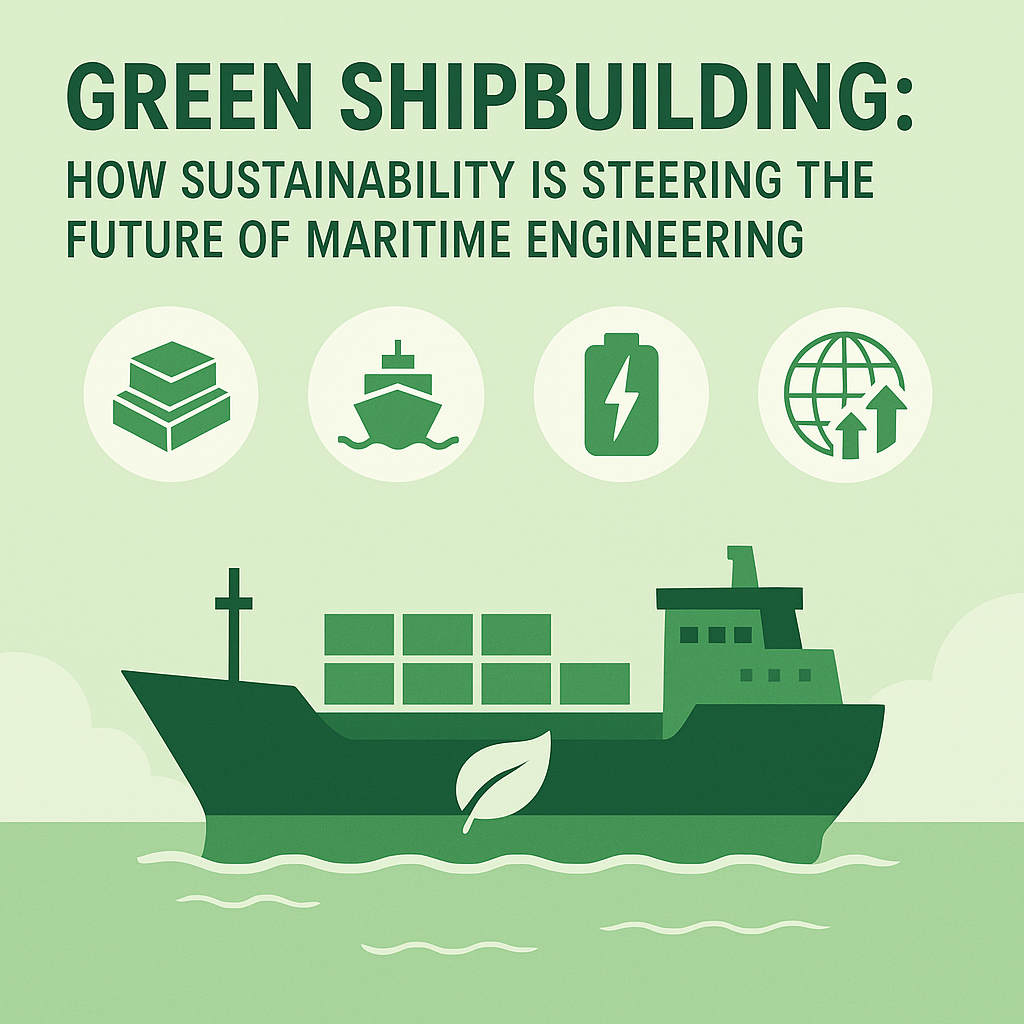
The Need for Sustainable Shipbuilding
The maritime industry plays a pivotal role in global trade—but at a significant environmental cost. Ships burn heavy fuel oil, which releases high levels of sulfur oxides, nitrogen oxides, and carbon dioxide. As a result, how green shipbuilding helps reduce emissions is a major industry focus.
To curb this, international regulations such as MARPOL Annex VI and IMO 2030 have set aggressive emissions-reduction goals. For shipbuilders, meeting these mandates isn’t just a matter of compliance—it’s also a chance to gain a competitive edge. Eco-friendly ship design and manufacturing practices offer both environmental benefits and long-term cost savings through better fuel efficiency and asset longevity.
Key Elements of Green Shipbuilding
Eco-Friendly Materials
Modern shipyards are shifting toward recyclable steel, low-VOC coatings, and bio-based composites to minimize their environmental footprint.
Energy-Efficient Ship Design
Innovations such as hull shape optimization and lightweight structures contribute to sustainable ship design, reducing drag and conserving fuel.
Hybrid and Electric Propulsion Systems
Hybrid marine engines and electric propulsion ships are becoming more common, especially for ferries and coastal vessels, significantly lowering harmful emissions.
Emission-Reducing Technologies
From LNG-powered ships to exhaust scrubbers and carbon capture systems, these technologies are revolutionizing how vessels minimize their output.
These innovations collectively form the foundation of emerging green shipbuilding technologies.
Role of Technology in Maritime Sustainability
Technology is at the core of this transformation. IoT and automation enable real-time monitoring of fuel consumption and engine health, enhancing efficiency.
Artificial Intelligence helps with route optimization, allowing ships to save fuel by avoiding congestion and adverse weather conditions. Meanwhile, digital twin simulations let engineers virtually test new designs for performance and environmental impact before construction begins.
These tools are integral to maritime industry sustainability trends shaping the next decade.
Challenges in Adopting Green Shipbuilding
Despite its benefits, green shipbuilding faces several hurdles:
- High initial investment in technology and infrastructure
- Lack of global standardization in regulations and certifications
- The complexity of retrofitting older ships vs. building new green vessels
These barriers often slow the adoption of sustainable practices in shipbuilding, particularly among smaller shipyards with limited capital.
Global Leaders and Case Studies
Several countries and companies are setting benchmarks in shipyard sustainability.
- Japan’s Eco-Ship initiative focuses on zero-emission vessels using renewable energy sources.
- Maersk, a global shipping giant, is deploying methanol-powered, carbon-neutral ships, signaling serious commitment to sustainability.
These examples prove that shipbuilders investing in green innovation are not only meeting environmental goals but also future-proofing their businesses.
Future Outlook
The future of maritime engineering and sustainability looks promising with:
- A rise in autonomous green vessels that self-navigate and optimize their routes
- Adoption of the circular economy where ships are designed with recycling and repurposing in mind
- Tighter policies and evolving consumer expectations driving the transition toward carbon-neutral ships and sustainable shipping
As technology advances, the maritime world will see a deeper integration of green shipbuilding technologies across the entire value chain.
Green shipbuilding is no longer a niche—it’s the future. As regulations tighten and environmental concerns intensify, sustainable ship design and eco-friendly innovations will be essential for survival and growth in the maritime sector.
By embracing green shipbuilding technologies, leveraging data and AI, and committing to sustainability, the industry can sail toward a cleaner, smarter, and more resilient future. It’s time for shipbuilders and engineers to steer their course with purpose—toward a sustainable future in maritime engineering.