


What Are Autonomous Ships?
Autonomous ships, also known as smart vessels or unmanned ships, are revolutionizing the maritime industry. Unlike traditional vessels, these ships are capable of navigating, operating, and making decisions with minimal or no human intervention. With the rise of AI in shipping and increasing interest in maritime automation, autonomous ships are quickly gaining momentum as a viable solution for the future of shipping.
Why the Shipping Industry Is Looking Towards Autonomy
The shipping industry faces a variety of challenges, including a shortage of skilled crew members, rising labor costs, and the demand for more efficient and safer operations. Autonomous ships offer a promising solution by reducing reliance on onboard human resources and optimizing operational efficiency. Moreover, with mounting pressure to reduce emissions and comply with global environmental regulations, unmanned ships present a pathway to cleaner and more sustainable shipping.
How Do Autonomous Ships Work?
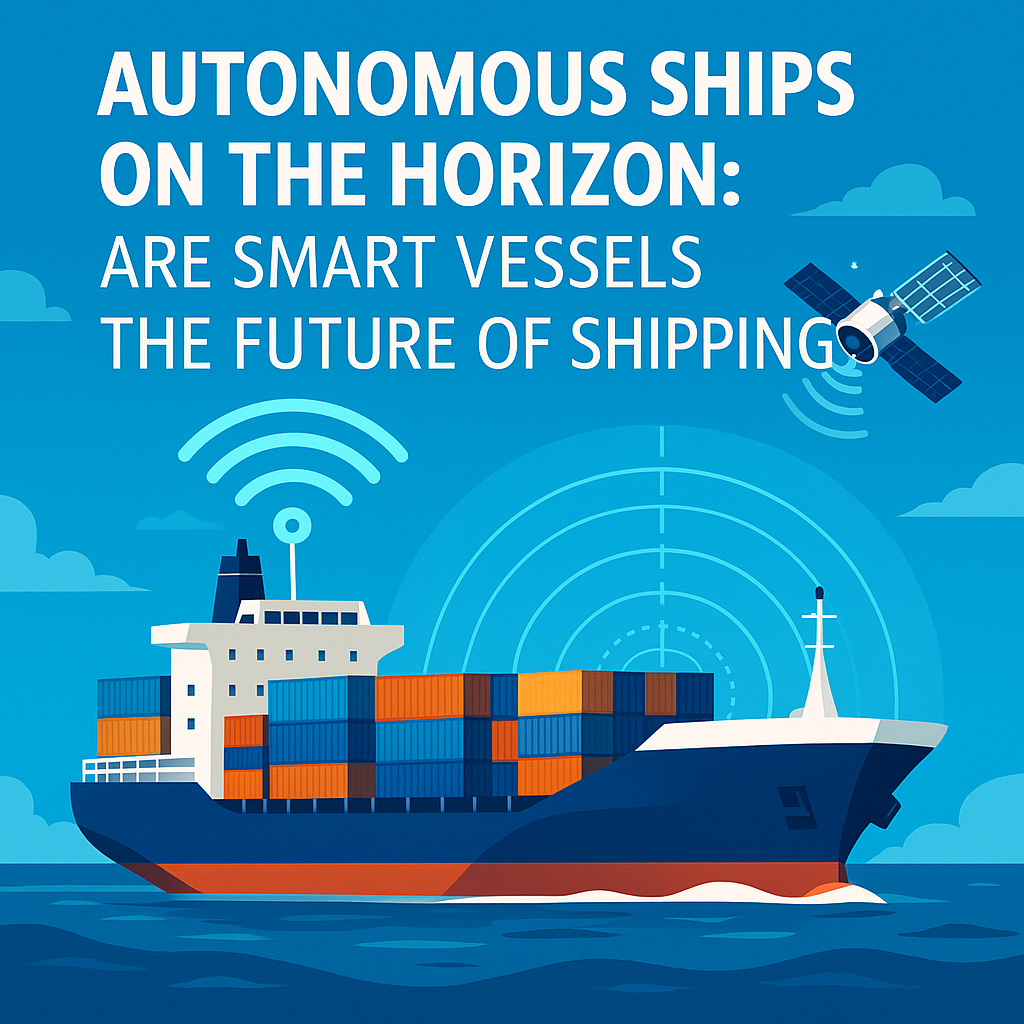
Smart vessels are powered by an integrated network of advanced technologies. These include artificial intelligence (AI), radar, LIDAR, GPS, sensors, IoT systems, and satellite communication. Together, they enable the vessel to perceive its surroundings, detect obstacles, optimize routes, and respond to environmental conditions. Based on the level of autonomy, ships may range from remotely controlled to fully autonomous. Shore-based control centers provide remote monitoring and intervention when needed.
Major Players and Real-World Developments
Several global players are already piloting autonomous vessels. Norway’s Yara Birkeland is one of the first fully electric and autonomous cargo ships. Companies like Rolls Royce, Kongsberg, IBM, and Marine AI are also developing technologies and conducting live trials. Regions like Europe, Japan, and South Korea are leading in the adoption of autonomous shipping, pushing the maritime sector toward the next wave of innovation.
Advantages of Smart Vessels
The benefits of autonomous ships are compelling. These include:
- Improved safety: Reducing human error in navigation and operations.
- Operational efficiency: Continuous 24/7 operation without crew fatigue.
- Cost reduction: Lower crew, fuel, and insurance costs.
- Environmental impact: Optimized routes and fuel efficiency lead to lower emissions.
- Real-time monitoring: IoT-based diagnostics and predictive maintenance.
Challenges Facing Autonomous Shipping
Despite their advantages, unmanned ships face significant hurdles:
- Regulatory issues: There is no unified international framework yet. IMO and SOLAS are still adapting.
- Cybersecurity threats: Autonomous vessels are vulnerable to digital attacks.
- Technology reliability: Ensuring fail-safe operations in unpredictable maritime environments.
- Public and industry acceptance: Concerns about job loss and trust in automation.
- High capital investment: Advanced technology and retrofitting costs are substantial.
Will Autonomous Ships Replace Human Crews?
The future is not about eliminating crews but transforming their roles. Most experts believe a hybrid model will emerge, where ships are semi-autonomous with crew support either onboard or remotely. This shift will necessitate new skills and training, empowering maritime professionals to supervise and manage smart vessels effectively.
What Lies Ahead: The Future of Maritime Autonomy
Widespread adoption of autonomous ships is expected to unfold gradually over the next few decades. Continued innovation in AI, battery systems, connectivity, and automation is essential. Smart vessels will also need to work in tandem with smart ports and logistics hubs to realize the full potential of maritime automation.
Are Smart Vessels Truly the Future of Shipping?
Autonomous ships represent a transformative shift in maritime transportation. While challenges remain, the benefits of smart vessels—including safety, efficiency, and sustainability—make them a compelling choice for the future. As the industry collaborates on technology and policy, unmanned ships are likely to become an integral part of global logistics.