


Introduction
In the world of industrial manufacturing, precision and consistency are everything. Whether it’s crafting a car engine, a jet turbine, or the casing of a smartphone, none of it would be possible without the invisible heroes of the production floor—tool and mold manufacturing. This essential sector plays a foundational role across industries such as automotive, aerospace, medical devices, electronics, and consumer goods.
This blog explores how tool and mold manufacturing is not just a support function but a critical driver of innovation, efficiency, and scalability in these industries.
1. Tool and Mold Manufacturing in the Automotive Industry
The automotive sector relies heavily on molds and dies to produce high-precision parts at massive volumes. From body panels and engine components to interior trim, tooling defines the shape, consistency, and quality of every manufactured vehicle.
Key Highlights:
- Automotive tooling helps achieve light weighting through materials like aluminum and composite molds.
- Precision molds enable faster production cycles and consistency in vehicle parts.
- CAD/CAM advancements enhance design and prototyping in automotive mold production.
2. Aerospace Mold Manufacturing for High-Performance Parts
The aerospace industry demands extreme precision, quality, and material performance. Tool and mold manufacturing in this sector must meet tight tolerances and withstand high stress and temperature environments.
Key Highlights:
- Aerospace mold making includes tooling for turbine blades, composite panels, and structural parts.
- Materials like Inconel and titanium require specialized molds for accurate shaping.
- Additive manufacturing and CNC machining are transforming aerospace mold design.
3. Mold Making in Consumer Goods Manufacturing
Consumer products—from kitchen appliances to toys—owe their form and function to molds. This sector demands flexibility, aesthetics, and fast time-to-market.
Key Highlights:
- Injection molds used for plastic housings, packaging, and electronics casings.
- Mold customization allows for high-product variety with minimal cost increase.
- Rapid prototyping and 3D printing enable faster mold development cycles.
4. Medical Device and Equipment Manufacturing
In the medical industry, mold precision translates directly into safety and usability. Components like syringes, implants, surgical tools, stent and diagnostic devices are often created using highly precise molds.
Key Highlights:
- Cleanroom-compatible mold production is essential.
- Biocompatible material shaping requires advanced tooling techniques.
- Shorter design-to-manufacture cycles help meet healthcare demands rapidly.
5. Electronics and Semiconductor Industry
From smartphone cases to microchip enclosures, tooling plays a huge role in the electronics industry. Here, precision down to the micron level is often required.
Key Highlights:
- Micro molds for tiny plastic and metal components.
- Thermal and EMI shielding tools used in mold fabrication.
- Increasing use of nano-coating and hybrid molds.
6. Trends Driving Innovation in Tool and Mold Manufacturing
To meet the growing demand across sectors, mold makers are adopting new technologies and practices:
- Modular mold design for flexible configurations.
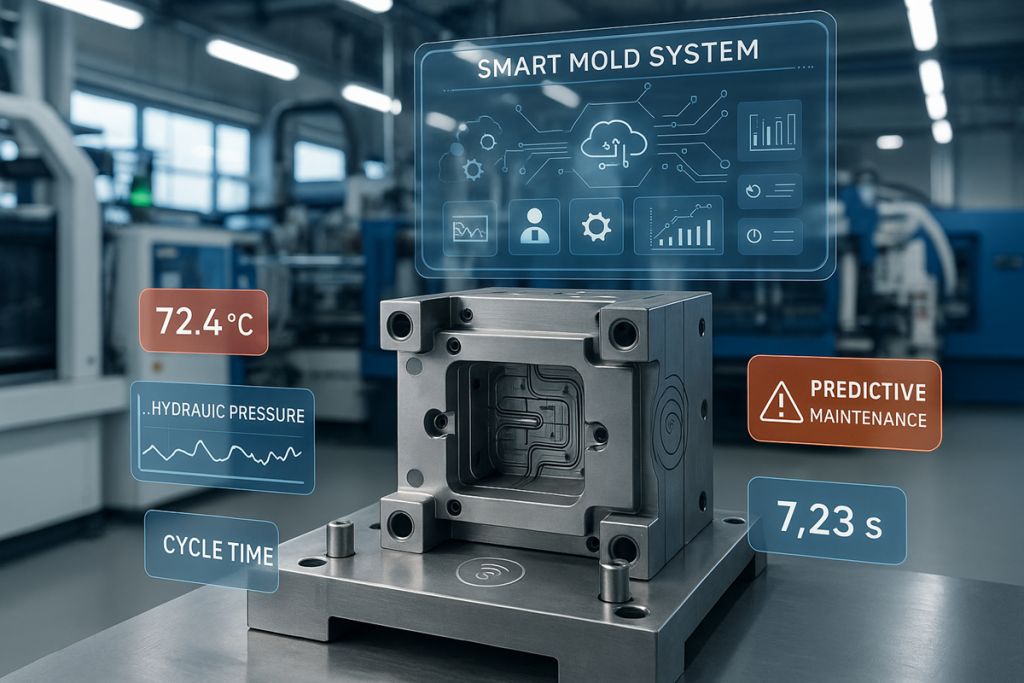
- IoT-enabled smart molds for real-time diagnostics and predictive maintenance.
- AI and machine learning in mold design optimization.
- Green tooling solutions with recyclable materials and energy-efficient processes.
Conclusion
From the cars we drive and the planes we fly to the smartphones in our pockets, tool and mold manufacturing is a silent but essential enabler. Its influence spans across automotive, aerospace, consumer goods, medical, and electronics industries—making it one of the most critical sectors in modern production.
Investing in innovation, embracing digital transformation, and aligning with the needs of each specific industry will ensure this sector remains the backbone of global manufacturing for decades to come.
Call to Action: Want to explore how smart tooling solutions can benefit your industry? Contact us to learn more about our high-performance mold manufacturing capabilities.

