
The Big Dream: Exploring the Universe
Since the first time humans looked up at the stars, we have dreamed of exploring the universe.
The Moon, the planets, the shining stars — all calling to us, saying:
“Come find out what’s out here!”
Today, that dream is coming true.
- We fly airplanes across continents.
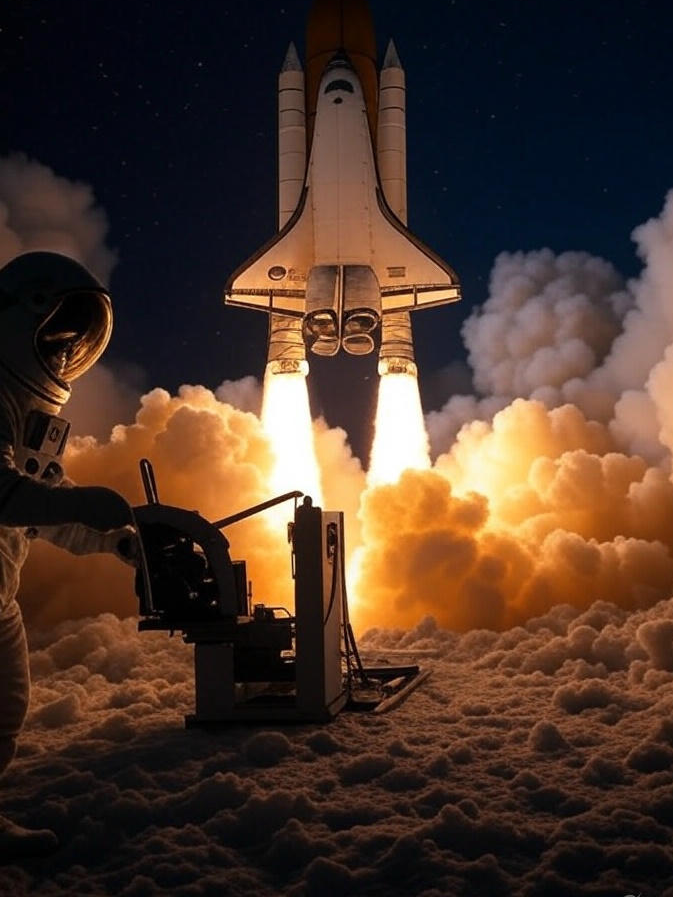
- We launch rockets into space.
- We send satellites to orbit Earth.
- We land rovers on Mars.
- We send telescopes far beyond to look at distant galaxies.
All of this may sound like science fiction, but it’s very real. And behind these amazing achievements, there’s an important technology that few people talk about:
Laser Cutting Machines.
Yes! The powerful beam of light used in these machines plays a huge role in making our space and flight dreams come true.
Let’s take a simple journey together to see how.
What is Aerospace?
First, let’s understand the world we’re talking about. Aerospace means everything related to:
- Flying in the sky (airplanes, drones, helicopters)
- Traveling into space (rockets, satellites, space stations, space telescopes)
Whether it’s a passenger flight to another country or a rover exploring Mars — it all belongs to the world of aerospace.
And building all these flying machines needs one thing above all:
Perfect precision.
Every tiny part must fit exactly. Every bolt, every panel, every bracket must be made with extreme care.
Because in the air — and especially in space — even the smallest mistake can cause huge problems.
That’s where laser cutting machines come in.
What is a Laser Cutting Machine? (Made Super Simple)
Imagine holding a magnifying glass in the sun. You focus the sunlight into a tiny spot, and it can burn a hole into paper.
Now imagine doing that with a powerful beam of laser light — but hundreds or thousands of times stronger and more accurate.
That’s how a laser cutting machine works.
- The machine produces a strong beam of light (laser).
- The laser is focused into a very thin, very hot point.
- This point melts or burns the material — metal, plastic, or composite.
- The machine moves the laser to cut shapes, holes, or designs.
The result?
Perfect cuts. Clean edges. Exact shapes.
Laser cutting machines are like invisible scissors made of pure light — cutting through even the toughest materials like butter.
Why Is Laser Cutting So Important for Aerospace?
In aerospace, everything we build must be:
✅ Extremely strong
✅ Super lightweight
✅ Highly precise
✅ Perfectly shaped
✅ Able to handle harsh conditions
A small error can lead to big disasters in flight or space.
Laser cutting machines help us make parts that meet these tough demands.
Let’s dive into some simple stories to see how.
Story 1: Rockets That Reach the Stars
The most exciting part of space exploration is the mighty rocket.
- It lifts off the ground with massive power.
- It carries satellites, astronauts, and cargo into space.
- It travels at incredible speeds.
But did you know?
A rocket is not one big piece. It is built from thousands of carefully made parts:
- Outer shells that protect from heat and pressure
- Internal tanks for fuel and oxygen
- Engines with precise nozzles
- Panels that connect every section
Each part must fit perfectly, or the rocket may fail.
Laser cutting machines help by:
- Cutting strong but light metal sheets (aluminum, titanium)
- Making holes for bolts, wires, and sensors
- Shaping complex curves and patterns
- Producing parts with almost zero error
Without laser cutting, making a rocket would be far slower, costlier, and riskier.
Story 2: Satellites — The Helpers Above Us
Every time you use your phone, check the weather, watch TV, or navigate with GPS — a satellite is helping you.
Satellites are like robots floating above Earth, quietly doing their jobs.
But satellites are delicate machines packed with:
- Cameras and sensors
- Solar panels for energy
- Antennas for communication
- Computers for control
Laser cutting machines play a big role here too:
- Cutting lightweight frames that hold everything together
- Making thin solar panel structures
- Cutting protective covers for electronics
- Creating tiny vent holes for heat control
Because satellites can’t be easily repaired in space, every part must be made perfectly — and laser cutting machines deliver that perfection.
Story 3: The International Space Station — A Giant Puzzle in the Sky
Imagine a giant house floating 400 kilometers above Earth — that’s the International Space Station (ISS).
- Astronauts live and work there.
- Science experiments happen every day.
- Supplies arrive regularly by spaceship.
The ISS was built by connecting many large modules, like big pieces of a puzzle.
Laser cutting machines helped build:
- Structural panels that lock together tightly
- Pipes for water, air, and fuel
- Brackets and racks for equipment
- Strong but light metal frames for safety
Every cut, hole, and shape had to be perfect, so the pieces fit together in space without any problems.
Story 4: Mars Rovers — Robots Exploring a Distant World
We have sent robots to Mars to explore:
- The soil
- The rocks
- The atmosphere
- The possibility of life
Rovers like Perseverance and Curiosity are full of:
- Wheels to roll across rocks
- Arms to collect samples
- Cameras to take photos
- Sensors to analyze soil and air
Laser cutting machines helped make:
- The lightweight frames
- The sturdy wheels
- The delicate robotic arms
- The protective housings for sensors
On Mars, there’s no one to fix things. Every part must work perfectly — laser cutting machines ensure this.
Story 5: Airplanes — Flying Through the Sky Safely
Every time you get on an airplane, you trust that every bolt and panel is safe.
Airplanes are also built with:
- Lightweight panels for fuel efficiency
- Strong wings to handle air pressure
- Engines that work flawlessly
- Interiors that are both comfortable and safe
Laser cutting machines are used to:
- Cut large sheets of metal for fuselage panels
- Shape complex curves for wings
- Drill tiny, precise holes for fasteners and sensors
- Produce thousands of parts quickly and accurately
Thanks to laser cutting, airplanes are lighter, safer, and more reliable than ever before.
Why Laser Cutting Machines are So Perfect for Aerospace
Let’s sum it up simply.
| Aerospace Need | Laser Cutting Solution |
|---|---|
| Precision | Cuts with extreme accuracy (micrometers) |
| Lightweight parts | Cuts thin metals without damaging them |
| Strong structures | Maintains metal strength during cutting |
| Complex shapes | Handles curves, holes, and odd designs easily |
| Fast production | Makes parts quicker than old methods |
| Less waste | Saves expensive materials by cutting efficiently |
The Special Power of Fiber Laser Cutting Machines
Today, fiber laser cutting machines are leading the way.
- They cut even faster.
- They handle stronger, tougher materials.
- They produce even finer, cleaner edges.
- They need less maintenance.
Machines like SLTL Group’s Infinity F1, Future X, and Vector models are already being used for aerospace work because they:
- Cut aluminum, titanium, and composites with ease.
- Make complex parts needed for space and flight.
- Use IoT technology to self-monitor and improve performance.
- Work with automated systems for 24/7 production.
When precision is life or death — as it often is in aerospace — fiber laser cutting machines are the ultimate tool.
The Future: The Universe Awaits
What comes next in aerospace is even more exciting:
- Space tourism: Regular people may soon visit space.
- Moon bases: Permanent stations on the Moon.
- Mars colonies: Humans living on Mars.
- Space factories: Building things directly in space.
All of this will require:
- New rockets
- New habitats
- New vehicles
- New systems
Which means millions of new parts that need to be made with perfect accuracy.
Laser cutting machines will be at the heart of all this:
- Cutting metal and composite materials
- Making customized parts quickly
- Allowing engineers to test new designs easily
- Helping companies build the future of space faster than ever before
SLTL Group: Shaping the Future of Aerospace
Companies like SLTL Group are already providing the advanced tools needed for this exciting future.
Our laser cutting solutions, including:
- Infinity F1
- Future X
- Vector
- Opti-Store systems
are:
- Cutting complex aerospace components with ease.
- Ensuring precision down to fractions of a millimeter.
- Integrating IoT-based monitoring for smart manufacturing.
- Enabling fully automated material handling for maximum speed.
From tiny satellite brackets to massive rocket panels, SLTL Group’s laser cutting machines are quietly helping turn dreams into reality.
A Simple Example: Building a Space Habitat
Let’s imagine we are building a small living station on the Moon.
We need:
- Metal walls to protect from radiation — laser cut to exact size.
- Frames for solar panels — laser cut for lightweight strength.
- Pipes for air, water, and fuel — laser cut with perfect holes.
- Connectors and joints — laser cut to fit tightly.
Without laser cutting machines, making all these parts would take far longer and cost much more. Laser cutting allows engineers to design, test, and build quickly — turning ideas into reality.
Conclusion: The Silent Partner Behind Every Flight and Mission
When people talk about rockets, satellites, or airplanes, we hear about astronauts, scientists, and amazing missions.
But behind every flight, every launch, every space mission, there is a quiet partner:
The Laser Cutting Machine.
It is:
- Quiet but powerful
- Precise but fast
- Reliable but flexible
Laser cutting machines help us:
- Build stronger, lighter, safer machines
- Create parts that fit perfectly
- Work faster and smarter
- Turn bold ideas into real missions
As we continue to explore the skies and stars, one thing is clear:
The Universe Awaits — and laser cutting machines are helping us get there.