

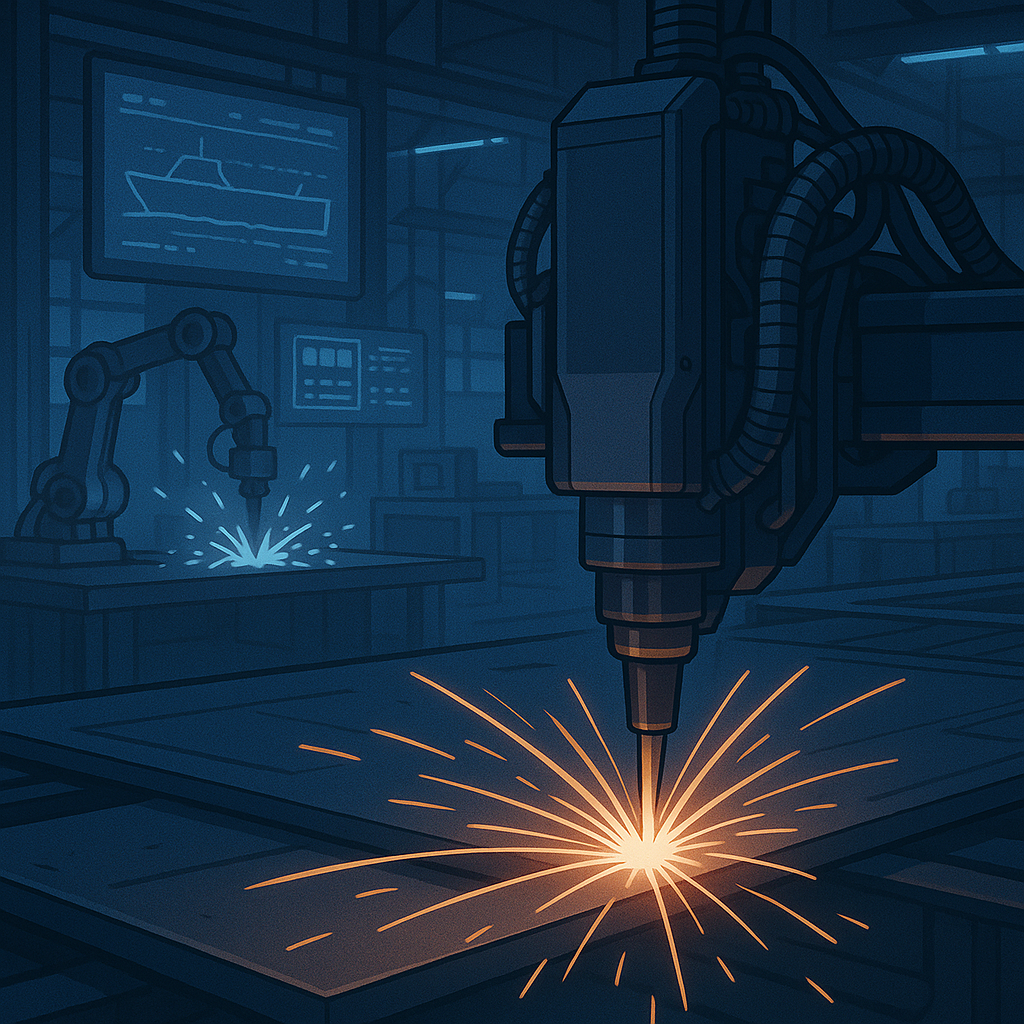
In shipbuilding, metal cutting is the backbone of fabrication. Whether it’s slicing steel for hulls or crafting intricate support structures, cutting accuracy and efficiency can make or break delivery timelines. As the industry embraces digitalization and smart shipyards, traditional methods like plasma cutting are being reevaluated—and laser cutting is quickly emerging as the preferred solution.
Plasma Cutting in Shipbuilding: The Basics
Plasma cutting has long been a go-to method in heavy industries. It works by sending an electrical arc through a gas (like nitrogen or oxygen), converting it into plasma that melts the metal. The benefits are clear:
- Cost-effective setup
- Fast cutting speed for thicker materials
- Easy to operate with basic training
But plasma cutting also comes with limitations:
- Lower precision, especially on complex geometries
- Wide heat-affected zones (HAZ), which can cause metal warping
- Rougher edges, leading to more post-processing
As shipbuilders demand tighter tolerances and smarter workflows, these drawbacks become critical.
How Laser Cutting Works in Shipyards
Laser cutting uses a concentrated beam of light to cut through metals with extreme accuracy. Integrated with CNC systems, it delivers precise cuts on hull panels, steel bulkheads, and custom parts.
- Laser beams can focus down to fractions of a millimeter, making them ideal for detailed work
- CNC automation allows for repeatable, high-volume precision
- Advanced systems reduce HAZ and material waste
This technology is not only transforming how ships are built, but who can build them—even smaller shipyards are adopting laser systems to stay competitive.
Laser vs. Plasma: Side-by-Side Comparison
| Feature | Plasma | Laser |
| Precision | Moderate | High |
| Speed | High | Very High |
| Thickness Capacity | High | Moderate (but growing) |
| Maintenance | Low | Medium |
| Cut Quality | Rough edges | Clean, smooth edges |
While plasma can still cut thicker metals faster, laser cutting wins in almost every other area—especially precision, finish, and automation compatibility.
Why Shipyards Are Switching to Laser
Shipyards around the world are upgrading to laser systems because:
- Tight Tolerances – Needed for modular shipbuilding and automated assembly
- Faster Prototyping – Enables design changes and quicker turnarounds
- Less Waste – Clean cuts reduce scrap and post-processing
- Smart Shipyard Integration – Lasers work seamlessly with digital twin environments and robotic handling systems
The switch isn’t just about quality—it’s about building more ships, faster, and smarter.
Case Studies: The Proof is in the Process
Several mid-sized and large shipyards have reported tangible benefits after transitioning to laser technology:
- A South Korean shipyard reduced assembly rework time by 30% by switching from plasma to laser cutting.
- An Indian defense contractor adopted fiber lasers for hull construction, enabling automated part nesting and reducing material usage by up to 15%.
- A European yacht builder reported 60% improvement in part accuracy, leading to better fitment and reduced labor costs.
These outcomes reflect how laser systems offer not just better performance—but operational cost savings and competitive differentiation.
The Future Is Laser-Sharp
As the shipbuilding industry evolves, precision and digital compatibility are becoming must-haves. While plasma cutting still holds value for certain high-thickness jobs, laser cutting is the future for modern, efficient shipyards.
From reduced waste to cleaner cuts and smarter workflows, laser beam technology is reshaping marine fabrication—one precise cut at a time.