

The global shipbuilding industry in 2025 is undergoing a major transformation. With rising demand for sustainable maritime transport, technological upgrades, and shifting geopolitical landscapes, traditional shipbuilding hubs are being challenged by emerging players. Understanding which countries are leading—and why—is crucial for manufacturers, suppliers, and policymakers alike.
What Defines a Shipbuilding Hotspot?
Not every shipyard or nation qualifies as a global shipbuilding leader. Several critical factors determine the status of a shipbuilding hotspot in 2025:
- Labor costs and skilled workforce availability
- Government incentives and policy support
- Technological capabilities—AI, automation, laser/CNC machines
- Strategic location with strong port access and export infrastructure
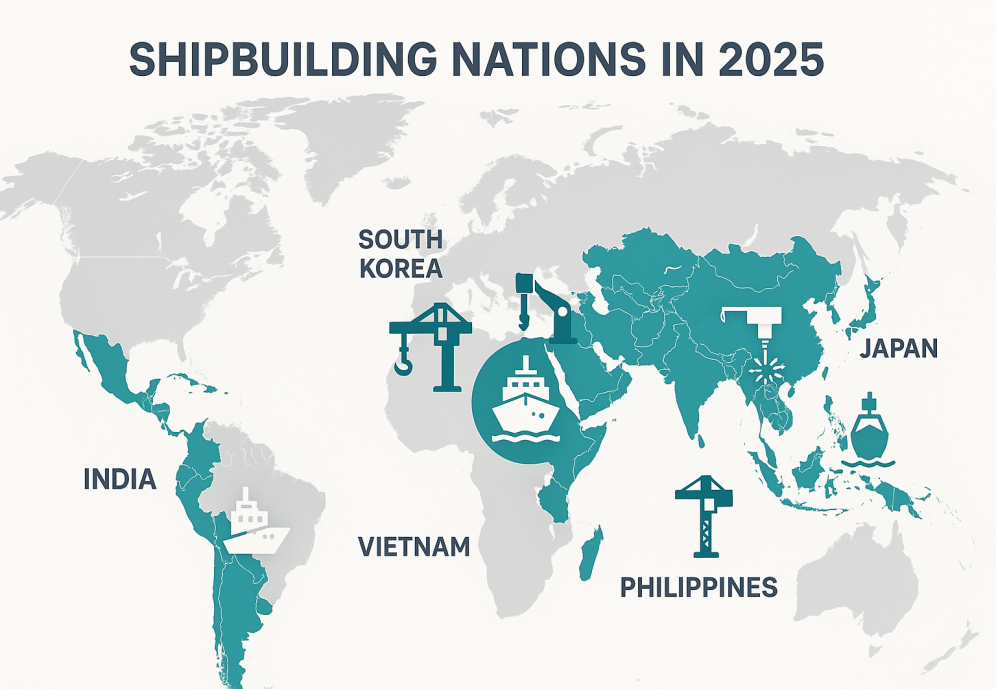
The global map is evolving, with several Southeast Asian nations stepping up alongside long-established shipbuilding powerhouses.
Top Shipbuilding Nations in 2025
1. China: Leading Through Innovation and Scale
China continues to dominate global shipbuilding, with the largest market share. Its competitive edge lies in:
- Integration of AI and IoT in smart shipyards
- Government-subsidized megayards
- Rapid adoption of laser cutting and robotic welding technologies
- Leadership in building cargo ships, tankers, and green vessels
2. South Korea: Specializing in High-Tech Vessels
Known for engineering excellence, South Korea remains a top player, especially in LNG carriers and container ships. Key strengths include:
- Smart shipyard automation
- Collaboration with AI startups for predictive maintenance
- Heavy investments in green ship design and hydrogen-fueled ships
3. Japan: Championing Sustainability and Precision
Japan’s shipbuilding sector emphasizes quality and environmental responsibility:
- Adoption of eco-friendly materials and energy-efficient designs
- Precision engineering with advanced CNC and laser manufacturing
- Government-backed carbon-neutral initiatives in ports and yards
4. Vietnam & Philippines: Cost-Efficient and Rising
These Southeast Asian countries are gaining ground by offering:
- Low-cost labor and expanding infrastructure
- Increasing foreign direct investments in shipyard construction
- Shipbuilding contracts for regional ferries, bulk carriers, and fishing vessels
5. India: Strategic Push with Defense and Commercial Orders
India is fast becoming a critical player in both military and commercial shipbuilding:
- “Make in India” incentives for domestic and foreign firms
- Defense contracts for submarines, destroyers, and patrol vessels
- Private sector adoption of laser cutting and 3D modeling in manufacturing
Regional Trends & Investment Highlights
- Private FDI is increasing in Asia-Pacific shipyards, especially in green ship technology and automation
- New green shipbuilding zones are emerging in regions like Gujarat (India), Jiangsu (China), and Geoje (South Korea)
- Smart port collaborations are expanding digital connectivity between yards and logistics hubs
What Makes These Countries Globally Competitive?
Several factors unite these leaders:
- Access to skilled maritime engineers and labor
- Strong local supply chain ecosystems for steel, electronics, and components
- Investment in digital tools, such as laser welding, AR-enabled design, and digital twins
- Export-ready ports with global connectivity
Who’s Rising Next?
Countries like Indonesia, Turkey, and Brazil are showing promise due to increased government focus, improving infrastructure, and strategic foreign investments.
Meanwhile, the role of digital transformation and sustainability will continue to define future shipbuilding competitiveness. Expect trends like AI-based predictive maintenance, blockchain-enabled supply chains, and zero-emission ships to shape the next generation of leaders.
In 2025, global shipbuilding is no longer defined by just tradition and capacity—it’s about technology, efficiency, and vision. While China, South Korea, and Japan retain dominance, countries like India, Vietnam, and the Philippines are carving out unique advantages in cost, speed, and innovation.
For industry stakeholders, staying informed about these shipbuilding hotspots can unlock opportunities in supply chain partnerships, laser manufacturing equipment sales, and strategic expansion. The future of maritime manufacturing is global, digital, and greener than ever.