
In today’s rapidly evolving maritime industry, small and mid-sized shipyards face growing pressure from global competitors, increasing complexity in ship design, and tighter delivery timelines. While large shipbuilders often dominate with vast resources and advanced facilities, smaller players are finding a new way to level the playing field—digital adoption.
This blog explores how small and mid-sized shipyards can embrace digital tools and technologies to become more competitive, agile, and future-ready.
What Does “Digital Adoption” Mean in Shipbuilding?
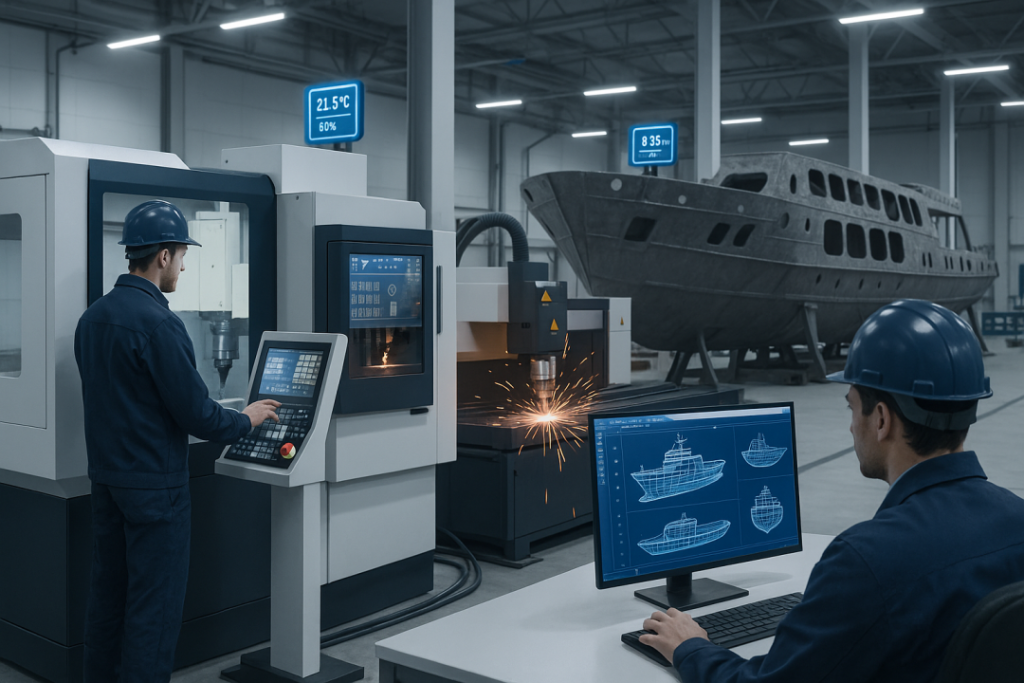
Digital adoption in shipbuilding refers to integrating modern technologies—like CNC machining, laser cutting, IoT, and cloud software—into everyday operations to improve productivity and efficiency.
For shipyards, this could include:
- CAD/CAM software for 3D design and modeling
- CNC machines for precision cutting and shaping
- IoT-enabled equipment for real-time monitoring
- Enterprise Resource Planning (ERP) for streamlined operations
- Laser cutting systems for high-accuracy component fabrication
These tools help smaller shipyards enhance quality, reduce waste, and accelerate turnaround—without needing to expand physically or hire extensively.
Why Digitalization Is No Longer Optional
The traditional, manual-heavy methods of shipbuilding are giving way to smarter, more connected approaches. Here’s why:
- Customer demands are rising: Clients expect faster delivery, better quality, and more customization.
- Designs are more complex: Modern vessels need precise builds that only technology can handle efficiently.
- Global competition is fierce: Competing with large players demands faster, leaner processes.
- Industry 4.0 is here: Smart shipyards are becoming the norm, not the exception.
Small and mid-sized shipyards that fail to adapt risk falling behind. Those who adopt early gain a strategic advantage.
Key Digital Technologies That Level the Playing Field
1. CNC Machines & Laser Cutting Systems
These enable high-speed, high-precision cutting of hull plates, beams, and bulkheads—significantly reducing errors and material waste.
2. 3D Modeling & Simulation
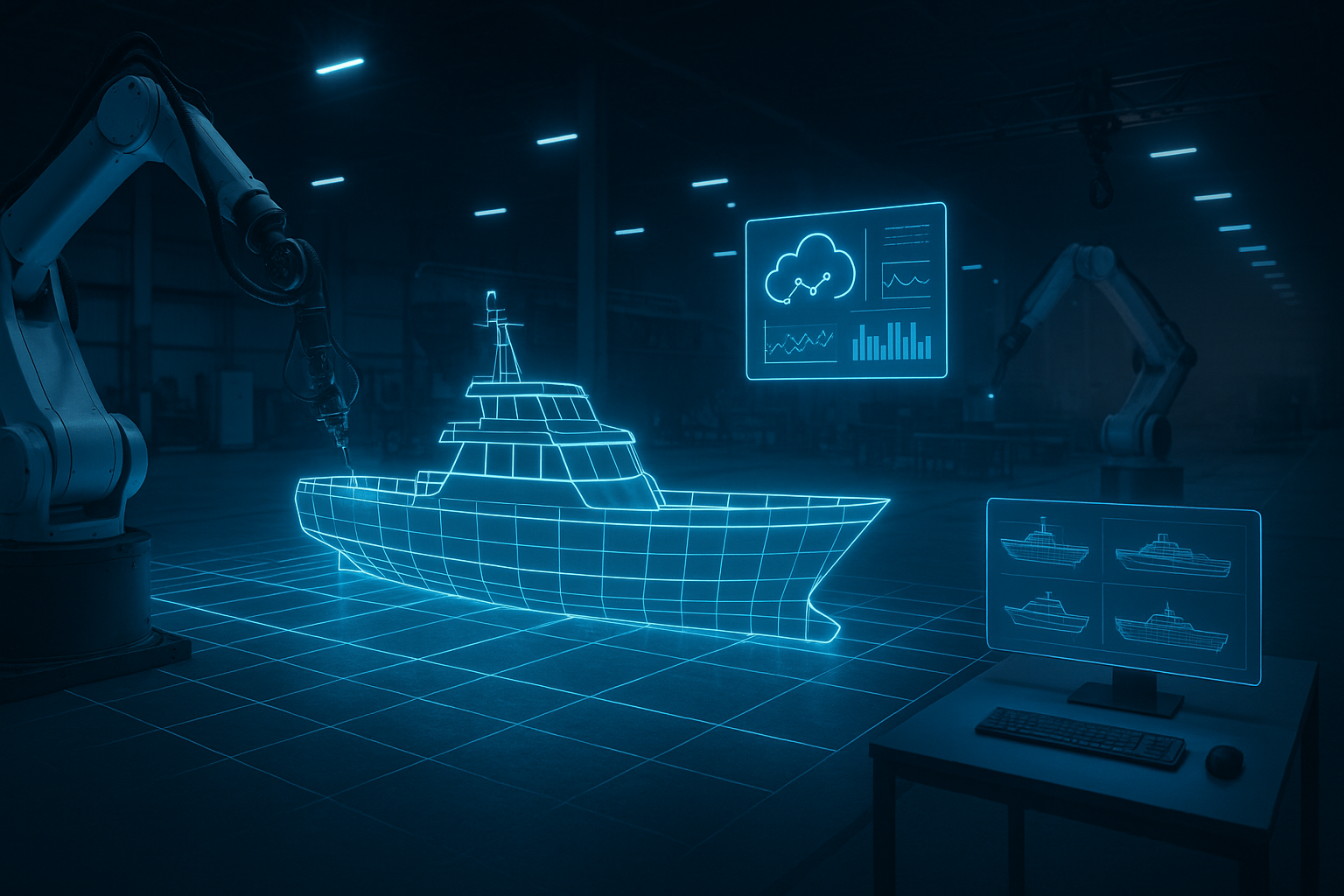
Digital design software allows for better visualization, prototyping, and modification—before physical work begins.
3. IoT and Predictive Maintenance
Sensors track machine health and performance in real time, allowing shipyards to prevent breakdowns and reduce downtime.
4. Cloud-Based Project Management
Coordination between departments becomes easier, even remotely, ensuring timelines are met and data is synchronized.
5. Digital Twin Technology
While often associated with large firms, simplified digital twin models can help smaller shipyards simulate vessel behavior and improve builds.
Real-World Benefits for Small & Mid-Sized Shipyards
Digital adoption isn’t just about fancy tech—it delivers real business results:
- Reduced material waste through accurate CNC cutting
- Faster project delivery with streamlined planning and monitoring
- Improved customer satisfaction via consistent quality
- Lower rework rates thanks to accurate digital prototyping
- Higher workforce productivity through automation and better resource allocation
Overcoming Common Barriers to Adoption
Adopting digital tools may seem daunting, but the key is to start small and scale gradually. Here are the common challenges and how to tackle them:
| Barrier | Solution |
| Limited budget | Invest in scalable solutions with high ROI (e.g., CNC or ERP software) |
| Lack of digital skills | Partner with tech providers for training and onboarding |
| Legacy equipment incompatibility | Choose modular tools that integrate easily with existing infrastructure |
| Fear of disruption | Begin with non-critical operations to test digital workflows |
Practical Steps to Start Digital Transformation
- Assess your digital readiness
- Evaluate current tools, workforce skills, and operational gaps.
- Identify high-impact areas
- Start with tasks like cutting, project planning, or inventory management.
- Choose reliable technology partners
- Look for those who provide support, maintenance, and training.
- Leverage industry grants or subsidies
- Governments and marine organizations often offer incentives for digital upgrades.
- Train your team
- Upskill your workforce to ensure smooth adoption and increased confidence in new systems.
The Future Is Digital—and It’s Inclusive
Digital transformation isn’t reserved for the big players anymore. With access to affordable tools and cloud technologies, small and mid-sized shipyards can now compete more effectively, deliver faster, and build smarter.
Embracing digital adoption in shipbuilding means moving beyond survival and steering confidently into long-term growth and innovation.