


As the global shipbuilding industry embraces digital transformation, cybersecurity in shipbuilding has become more critical than ever. With smart shipyards now powered by IoT, AI, and automation, the sector is gaining speed and precision—but also facing growing cyber threats.
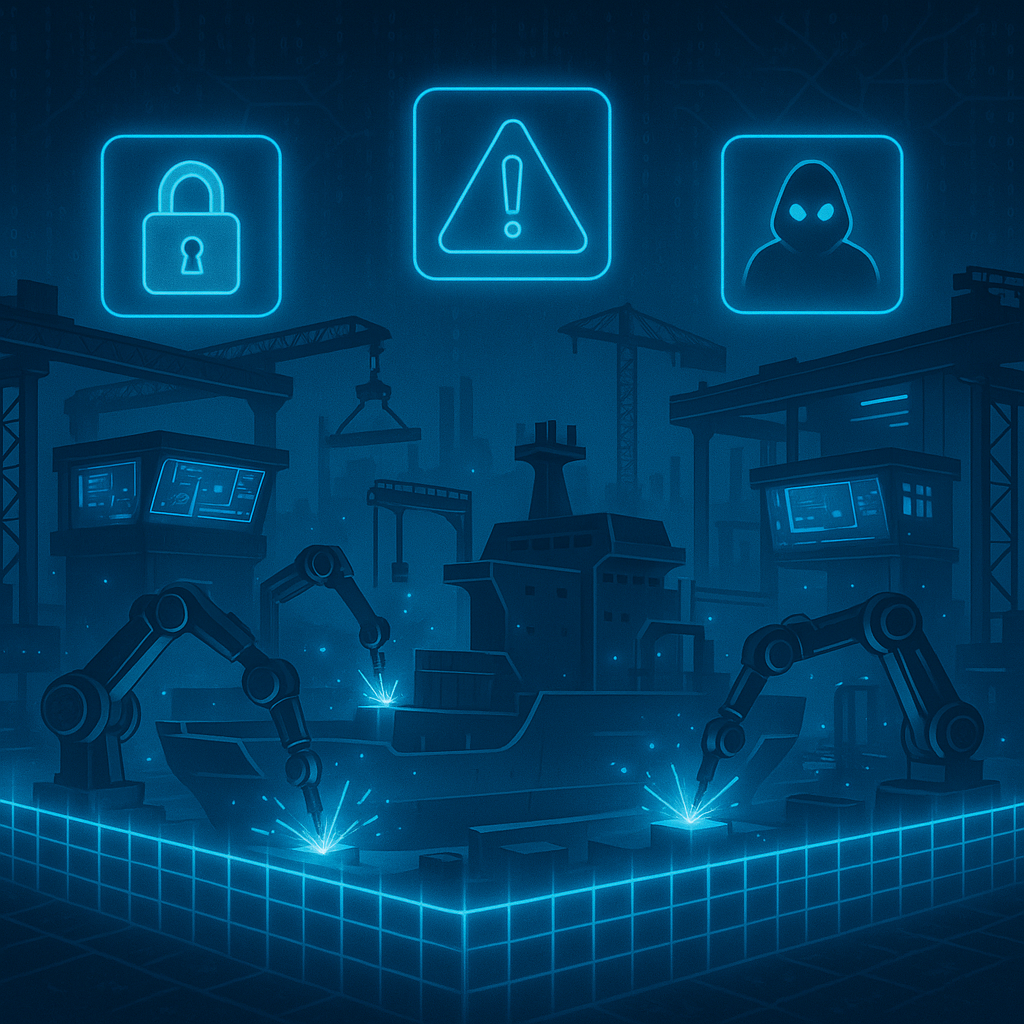
Rising Risks in Smart Shipyards
Modern shipyards are increasingly connected. From robotic welding systems to remote-controlled cranes and cloud-based design files, shipbuilding now operates through a digital nervous system. However, this connectivity also introduces:
- Ransomware attacks that freeze operations until ransom is paid
- Malware infiltrations targeting production control systems
- Phishing schemes stealing employee credentials
- IoT vulnerabilities that allow unauthorized access to sensors and automated machinery
Without proper safeguards, a single breach could disrupt operations, compromise sensitive naval or defense data, and delay ship deliveries.
Real-World Impact of Cyberattacks in Maritime
The maritime industry has already seen major cybersecurity incidents:
- In 2017, Maersk suffered a NotPetya ransomware attack that cost over $300 million, shutting down ports worldwide.
- Port authorities in the US and Belgium have reported system hacks leading to cargo rerouting and container misplacement.
- In several shipyards, malware has disabled robotic arms and CNC machines, delaying hull assembly and causing financial losses.
The consequences extend beyond operational downtime—they pose national security, environmental, and economic threats.
How Shipyards Are Responding
Shipyard operators are ramping up their defense through:
- Firewall and endpoint security systems for network segmentation
- Encrypted communication protocols for safe file transfers and remote access
- OT (Operational Technology) security to protect factory-floor systems from external access
- Access control and multi-factor authentication (MFA) to reduce unauthorized entry points
The Power of AI and Machine Learning
AI is emerging as a key ally in maritime cybersecurity. Smart shipyards are deploying:
- Anomaly detection systems to flag irregular behavior in real time
- Machine learning algorithms that predict potential breach patterns
- AI-driven monitoring dashboards for continuous, 24/7 oversight of critical systems
These tools reduce response time and help in early containment of threats before they cause damage.
Regulatory Landscape: Compliance is Critical
To address growing cyber risks, regulatory bodies have set clear guidelines:
- IMO 2021 Cyber Risk Management mandates that cyber security be part of ship safety management systems (SMS).
- The U.S. Coast Guard’s cybersecurity framework applies to port facilities and industrial shipyards.
- The European Union Agency for Cybersecurity (ENISA) has issued frameworks for maritime OT systems.
- In India, the Ministry of Defence has emphasized cybersecurity protocols for naval shipyard operations.
Non-compliance not only increases vulnerability—it can also result in legal penalties and reputational damage.
Best Practices for Shipyard Owners and Operators
To stay secure in an increasingly digital shipyard environment, experts recommend:
- Cyber hygiene training for all employees—from engineers to IT staff
- Third-party risk assessments to evaluate vendor and contractor networks
- Regular penetration testing and incident response planning
- Segregated networks between IT and OT systems
- Implementing zero-trust architecture to limit lateral movement post-breach
Navigating the Digital Waters Securely
Connected shipyards are the future of shipbuilding—but only if they’re built on secure digital foundations. As shipbuilders continue to automate, integrate AI, and connect globally, cybersecurity must be prioritized at every level.
By adopting robust protection strategies, complying with international standards, and leveraging AI for proactive defense, the maritime industry can safeguard its operations—and reputation—for decades to come.