
Shipbuilding has always demanded precision, strength, and durability. As vessels grow more advanced and global regulations become stricter, laser technology in shipbuilding is emerging as the key enabler of precision and efficiency. From cutting thick steel plates to marking individual components for traceability, lasers are reshaping the way ships are built.
Let’s explore how laser systems are powering a new era in maritime manufacturing.
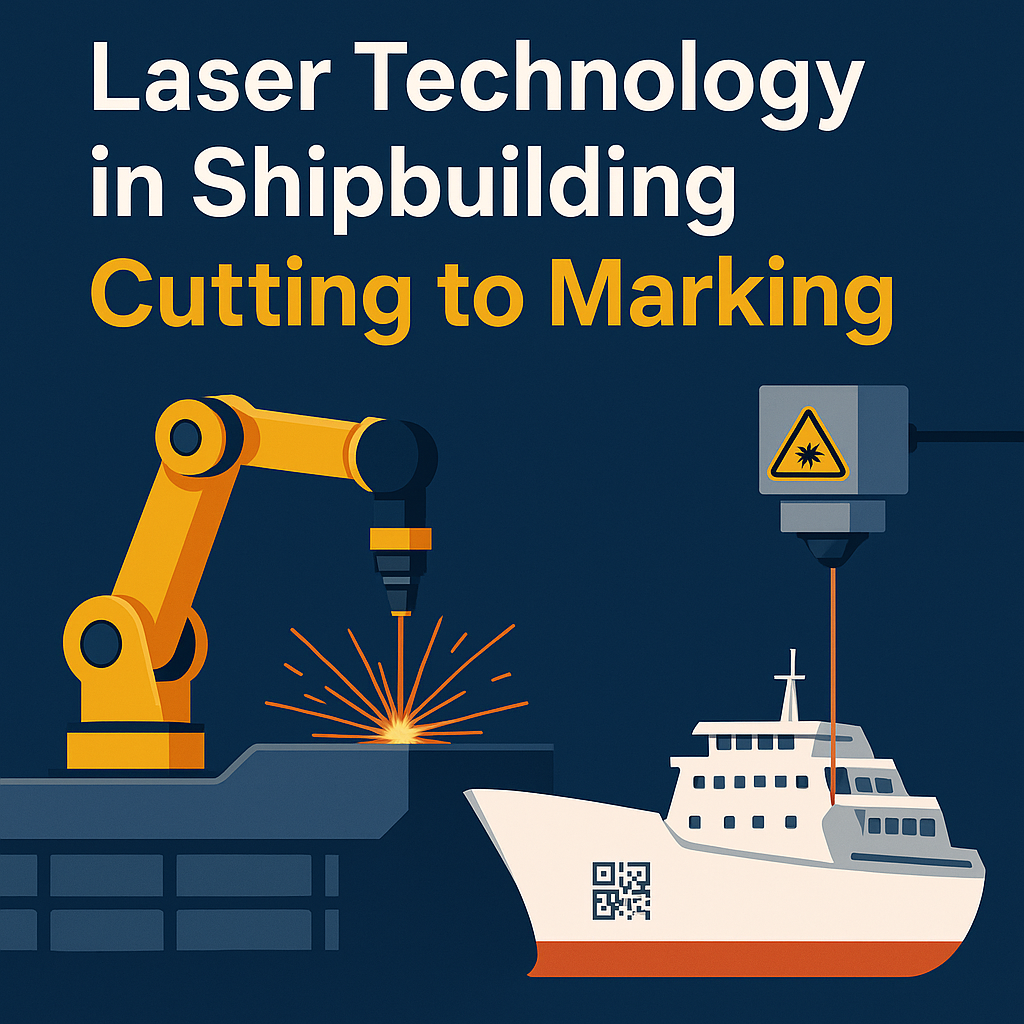
Why Laser Technology Is Gaining Ground in Shipbuilding
Laser systems offer shipbuilders a key advantage: precision without compromise. Unlike traditional cutting or welding methods, lasers are non-contact tools, which means:
- Less wear and tear on tools
- Cleaner cuts and welds
- Higher speed and repeatability
- Minimal material distortion
With increasing demand for smart, fast, and automated shipbuilding, laser technology in shipbuilding is no longer optional—it’s a competitive necessity.
Applications of Laser Technology Across the Shipyard
1. Steel Cutting
Laser cutting has become the go-to method for slicing thick steel sheets used in hull construction and structural panels. Compared to plasma or flame cutting, it provides:
- Tighter tolerances
- Smoother edges with minimal burrs
- Faster production with CNC integration
It also supports automated nesting and material optimization, reducing waste and improving yield.
2. Welding & Joining
In structural fabrication and joining of heavy sections:
- Laser welding provides deeper penetration and narrower seams.
- There’s less thermal distortion, which is critical in curved or precision areas.
- It enables hybrid welding with traditional methods for strength and speed.
3. Laser Marking for Traceability
Component marking is crucial in shipbuilding to meet international safety and compliance standards. Laser marking allows:
- Permanent, non-touch marking of part numbers, barcodes, QR codes
- No ink or consumables needed
- High resistance to corrosion, heat, and saltwater environments
This ensures complete part traceability throughout the vessel’s lifecycle—from production to maintenance and retrofitting.
4. Precision Component Fabrication
Laser machines are used to manufacture components like:
- Engine room brackets
- Customized pipe flanges
- Lightweight internal fixtures
This ensures both customization and consistency, even for short production runs.
Benefits of Laser Technology in Maritime Manufacturing
Using laser systems brings a multitude of operational advantages:
- Higher productivity through automation and reduced downtime
- Consistent quality across different material types and thicknesses
- Lower rework rates and material wastage
- Improved worker safety with enclosed and automated systems
- Faster compliance with traceability and quality assurance regulations
Challenges and Considerations
While laser technology is powerful, it requires some preparation:
- Capital investment for machines and integration systems
- Skilled workforce trained in CAD/CAM and laser operations
- Workplace safety protocols for handling high-power lasers
- Regular maintenance for optics and components
However, these challenges are outweighed by the long-term savings and performance improvements.
Future Outlook: Laser-Powered Smart Shipyards
The future is bright—and laser-driven. Advancements are leading toward:
- AI-integrated laser systems for defect detection and real-time correction
- IoT-enabled machines for predictive maintenance
- Laser-powered automation in modular shipbuilding
- Eco-friendly applications like reduced emissions and material recycling
In smart shipyards of the future, lasers will form the backbone of digital fabrication workflows.
From steel cutting to component marking, laser technology is redefining the way ships are built. It empowers shipyards to be faster, cleaner, and more precise while enabling them to meet modern demands for efficiency and traceability.
If your shipyard is looking to stay ahead of the curve, laser integration isn’t just an upgrade—it’s a transformation.