
In an industry where precision, timing, and quality are critical, the shipbuilding world is turning to a powerful innovation—the digital thread. By digitally connecting the entire lifecycle of a vessel, from design to decommissioning, the digital thread is transforming how shipyards operate.
Let’s explore how this concept is redefining shipbuilding and helping shipyards create smarter, faster, and more reliable ships.

What Is the Digital Thread in Shipbuilding?
The digital thread refers to the seamless flow of digital data that connects every phase of a ship’s lifecycle. It ensures that information generated during the design phase can be directly used in production, and later throughout the operation, maintenance, and upgrading of the ship.
Unlike a digital twin (which is a virtual model of a physical asset), the digital thread emphasizes data continuity—making sure that all departments and processes are working with real-time, consistent data.
Connecting the Three Pillars: Design, Production, Lifecycle
1. Design Phase
Modern ship design relies on advanced CAD modeling, 3D visualization, and simulation tools. The digital thread ensures:
- Designers can share real-time updates with production teams.
- Fewer design errors thanks to live data feedback.
- Multiple departments can work collaboratively across platforms.
2. Production Phase
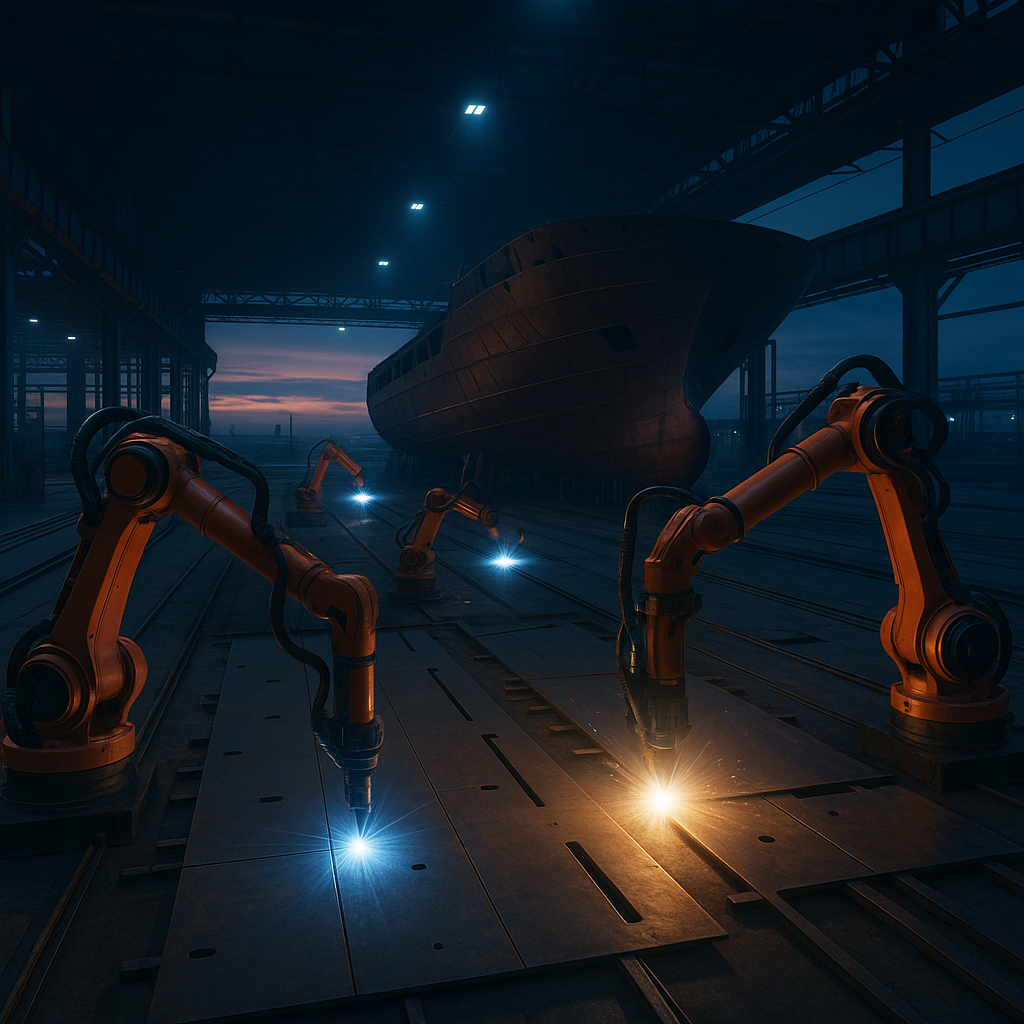
Production becomes faster and more accurate when it’s guided by data-rich digital designs. With the digital thread:
- CNC and laser machines receive updated cutting paths directly from design files.
- Real-time data flags potential issues before fabrication begins.
- Digital BOMs (Bill of Materials) ensure zero mismatches in parts.
3. Lifecycle Phase
Even after delivery, the ship continues generating data via onboard sensors, inspections, and updates. This allows:
- Predictive maintenance using IoT-based condition monitoring
- Easier retrofitting based on historical data
- Efficient tracking of wear, performance, and safety metrics
Key Technologies That Enable the Digital Thread
- PLM (Product Lifecycle Management) tools to manage data from concept to disposal
- IoT sensors for tracking ship condition and performance in real time
- Cloud computing to store and analyze massive data sets
- AI/ML algorithms to detect trends and support decision-making
Benefits of Implementing a Digital Thread
Implementing the digital thread unlocks several advantages:
- Full traceability across the lifecycle, aiding in audits and compliance
- Reduced rework and delays due to better planning and integration
- Shorter production cycles from automated, real-time workflows
- Better lifecycle support, extending vessel usability and resale value
Challenges to Consider
Adopting a digital thread isn’t without challenges:
- Integrating legacy systems with new digital platforms can be complex
- Cybersecurity must be enhanced to protect sensitive vessel data
- Initial investment can be significant, but ROI improves over time
- Skill gaps in digital tools require upskilling for shipyard workers
How to Start Your Digital Thread Journey
- Assess your current digital maturity
- What systems are already in place? What’s missing?
- Choose scalable, modular tools
- Look for PLM or IoT platforms that fit your size and budget
- Encourage interdepartmental collaboration
- Align design, production, and maintenance teams around shared data
- Secure your data
- Implement best practices in cybersecurity and backup management
The Future is Interconnected
The digital thread in shipbuilding is more than just a buzzword—it’s a strategic approach to building vessels that are smarter, more efficient, and easier to maintain. For shipbuilders aiming to stay competitive in an increasingly tech-driven industry, embracing this connectivity is no longer optional—it’s essential.
Whether you’re running a small shipyard or managing a fleet, adopting the digital thread can be the thread that ties your entire operation together.