
Introduction: What Is Hybrid Manufacturing, and Why Does It Matter in Tooling?
In the current high-speed manufacturing environment, efficiency, accuracy, and responsiveness are essential. This is particularly true in the tool and mold making industries, where traditional manufacturing methods face increasing pressure to deliver faster, better, and more sustainable results. Enter hybrid manufacturing for efficient Tooling— a powerful combination of additive manufacturing (such as 3D printing) and subtractive manufacturing (such as CNC machining).
By merging these two methods, manufacturers can achieve a new level of tooling efficiency, reducing lead times, improving precision, and optimizing costs. But what exactly does hybrid manufacturing mean in this context, and how is it reshaping the way tools and molds are made?
1. How Do Additive and Subtractive Manufacturing Work Together?
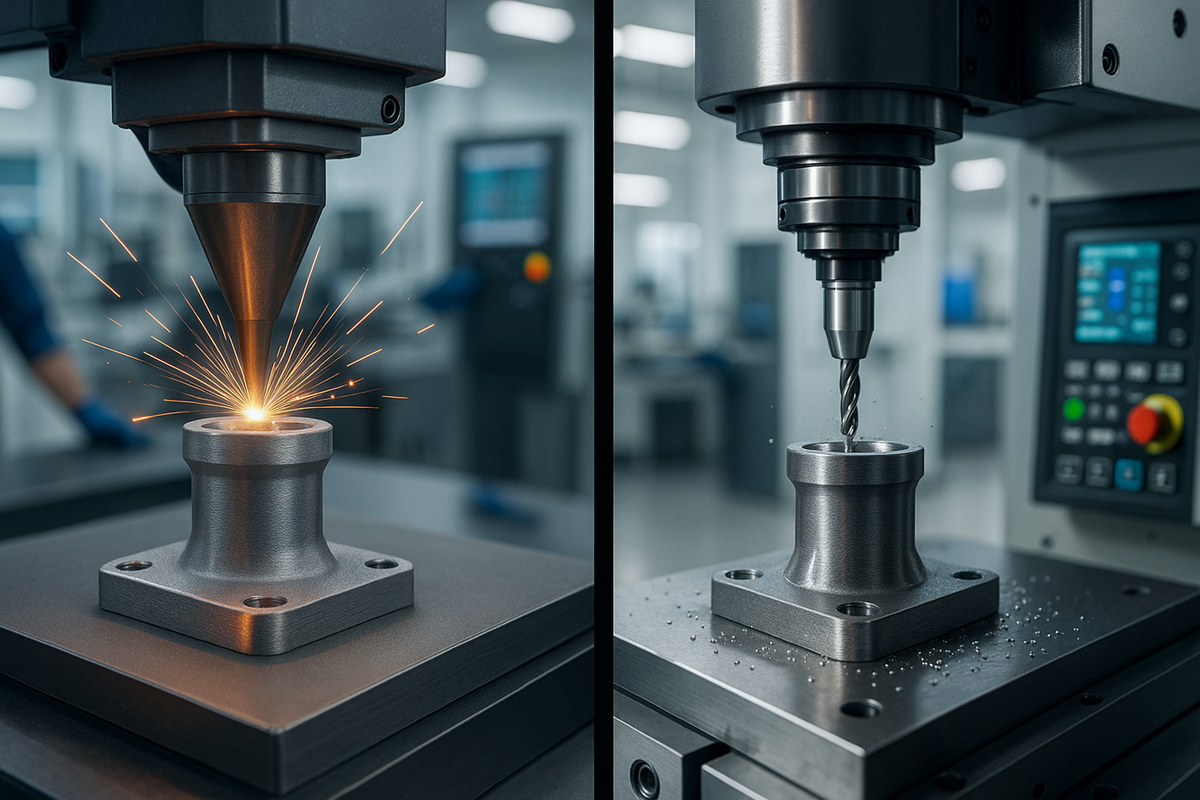
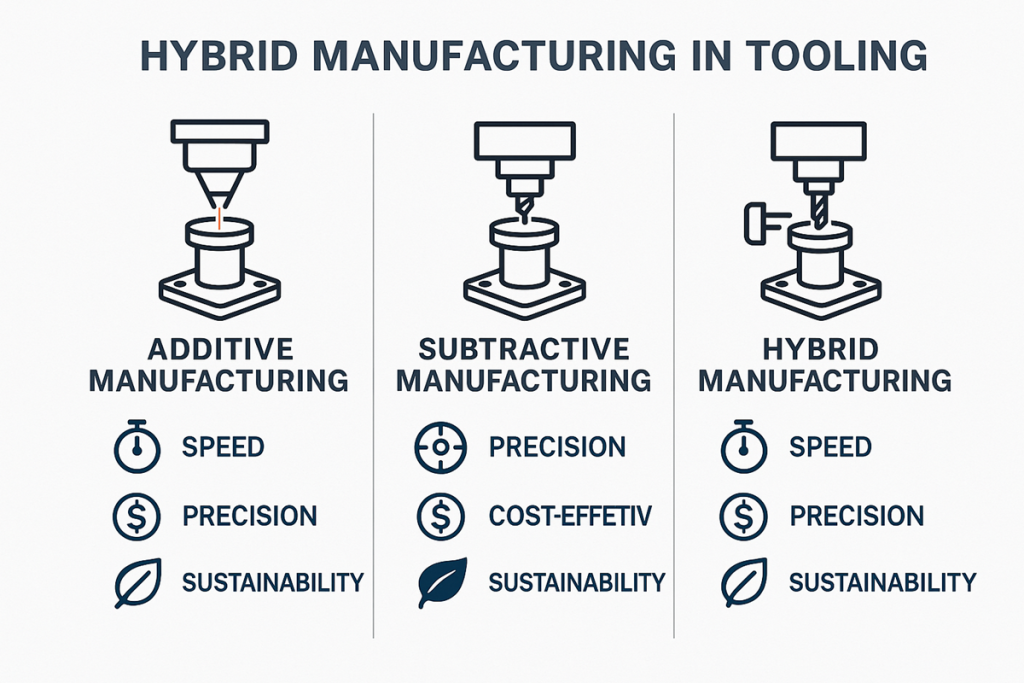
Additive manufacturing builds components layer by layer, enabling complex geometries and lightweight structures that would be nearly impossible with traditional methods. Subtractive manufacturing, on the other hand, removes material from a workpiece using techniques like milling or turning, providing unmatched surface finish and dimensional precision.
Together in a hybrid manufacturing system, the above processes complement one another. Additive techniques are used to rapidly create near-net shapes or internal features, while subtractive methods finish the component to tight tolerances. Modern hybrid machines integrate both systems into a single platform, allowing seamless transitions between building and machining operations. This does away with the necessity of several setups and significantly minimizes overall manufacturing time.
2. What Benefits Does Hybrid Manufacturing Bring to Tooling?
Tooling and mold making often involve intricate designs, deep cavities, and conformal cooling channels — features ideally suited to additive techniques. With hybrid manufacturing, manufacturers can fabricate these complex geometries directly, then finish critical surfaces with CNC precision.
Key benefits include:
- Reduced Lead Times: Combining additive and subtractive operations in one setup minimizes downtime between processes.
- Lower Material Waste: Additive manufacturing deposits material only where needed, significantly cutting raw material usage.
- Energy Efficiency: Fewer processing steps and optimized tool paths reduce overall energy consumption.
- Improved Mold Complexity and Surface Quality: Hybrid methods allow for more intricate mold designs with smoother finishes, boosting performance and longevity.
These advantages directly translate to better tooling efficiency, helping manufacturers stay competitive.
3. What Are Real-World Applications of Hybrid Tooling?
Applications of hybrid manufacturing in mold making are already being seen across various sectors. Industries such as aerospace, automotive, and medical are leading the way in adopting this transformative technology.
- Aerospace: Engineers use hybrid systems to create lightweight tools with embedded cooling or structural reinforcements. Components like turbine blades and injection molds for composite parts benefit greatly from this approach.
- Automotive: Tooling for complex interior components and prototype dies is accelerated through hybrid manufacturing, enabling rapid iteration and reduced design cycles.
- Medical Devices: Surgical instrument molds and specialized tooling for implants can be manufactured with intricate, patient-specific features.
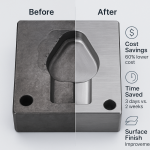
Case studies show that companies implementing hybrid tooling have seen lead time reductions of up to 60%, cost savings of over 30%, and improved tool life and performance.
4. What Are the Key Challenges in Adopting Hybrid Manufacturing?
While promising, hybrid manufacturing does pose a number of challenges:
- High Equipment Costs: Hybrid machines are still relatively expensive, making it difficult for SMEs to adopt them without financial support or long-term ROI plans.
- Software Limitations: CAM software needs to handle both additive and subtractive paths seamlessly. Interoperability remains a hurdle.
- Skill Gaps: Operators require new training to manage hybrid machines, understand material behavior during additive deposition, and plan dual-process toolpaths.
Addressing these obstacles will require investment in workforce development, software integration, and targeted funding initiatives.
5. How Does Hybrid Manufacturing Influence Tool Repair and Modification?
One of the most exciting uses of hybrid technology lies in tool repair and refurbishment. Instead of replacing an entire mold or die, manufacturers can:
- Additively rebuild worn or damaged areas
- Machine the repaired areas to original specifications
This drastically extends tool life and minimizes downtime. Hybrid systems also allow localized reinforcement or design improvements without scrapping the entire component. In industries where uptime is crucial, this repair capability offers enormous value.
6. What Is the Future Outlook for Hybrid Manufacturing in Tooling?
The future of hybrid manufacturing looks bright, particularly with advancements in materials science and automation. Smart sensors, AI-driven process control, and real-time quality monitoring are enhancing hybrid machine reliability and output.
Emerging trends include:
- Integrated production lines combining hybrid systems with robotics for autonomous operation.
- Use of high-performance materials like titanium or Inconel in hybrid processes.
- Sustainability through optimized material usage, reduced carbon footprint, and recyclable powders.
As these trends mature, hybrid manufacturing could become the standard in every modern tool room.
Conclusion: Is Hybrid Manufacturing the Future of Tooling Efficiency?
Absolutely. By harnessing the best of both additive and subtractive technologies, hybrid manufacturing represents a major leap in how tools and molds are designed, built, and maintained.
To embrace this shift, manufacturers should:
- Evaluate which tooling operations could benefit most from hybrid methods.
- Invest in pilot programs or partnerships with technology providers.
- Upskill teams to handle dual-process workflows.
The journey toward smarter, faster, and more sustainable tooling begins with hybrid manufacturing — the next evolution in tooling efficiency.