
1. Introduction
In today’s fast-paced manufacturing world, automation in manufacturing has evolved beyond traditional robots. Enter collaborative robots in mold shops, or cobots—machines specifically designed to work safely alongside human operators. Not like the traditional industrial robots, cobots are flexible, compact, and equipped with advanced sensors to prevent accidents.
As mold shops face mounting pressure to increase output while addressing labor challenges and safety requirements, many are turning to cobots as a smart solution. Let’s explore why the mold manufacturing industry is rapidly adopting cobot technologies.
2. What Challenges Do Mold Shops Face Today?
Modern mold shops grapple with several operational hurdles:
- Labor shortages make it difficult to maintain steady production levels, especially for repetitive or tedious tasks.
- Safety concerns are paramount, especially during heavy mold handling or during intricate polishing operations.
- High precision needs in polishing and toolmaking require consistent accuracy that manual labor often struggles to maintain over long shifts.
3. How Do Cobots Solve These Challenges in Mold Shops?
Collaborative robots in mold shops are specifically engineered to overcome these limitations:
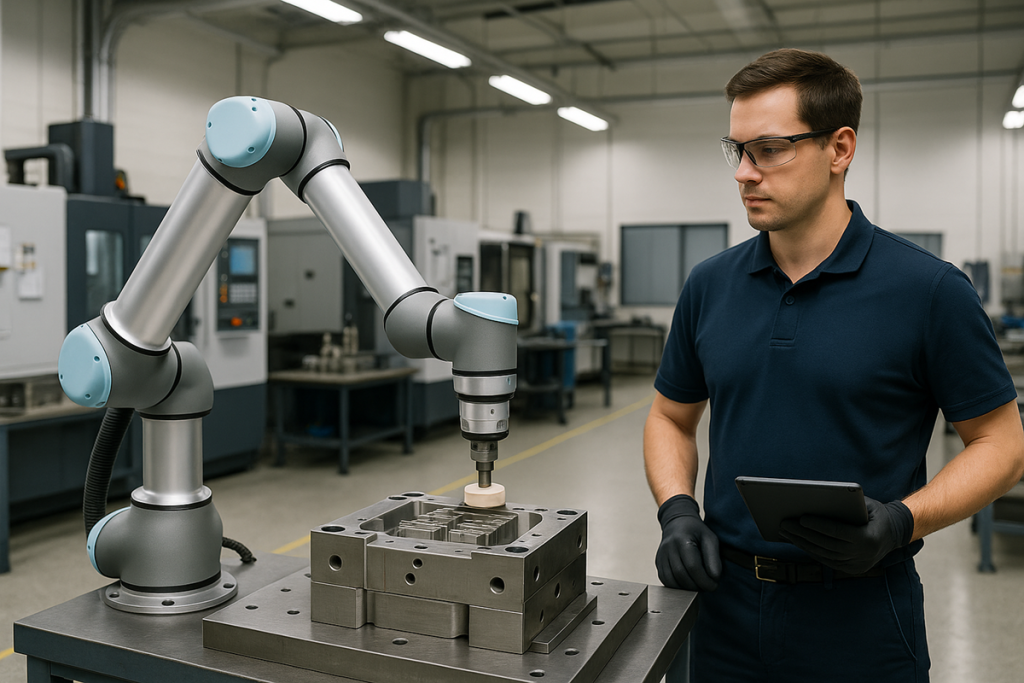
- They operate with safe interaction with human operators, using sensors and force limitations to prevent injury.
- Cobots bring high repeatability and precision in polishing, enhancing surface quality and reducing scrap rates.
- These robots can assist with lifting, assembling, and inspecting molds, reducing the physical burden on human workers.
4. What Are Real-World Examples and Trends in Cobot Use?
Several global mold makers using cobots have reported impressive improvements:
- A European mold shop reduced polishing time by 40% by integrating cobots.
- An Asian manufacturer deployed cobots in mold inspection, slashing defects by 25%.
- In North America, shops report a Cobot ROI in manufacturing within 12–18 months through labor savings and uptime gains.
These real-world cobot-driven cells show how flexible deployment can yield measurable productivity and safety enhancements.
5. Where Are Cobots Deployed Within Mold Shops?
Key application areas for collaborative robots in mold manufacturing include:
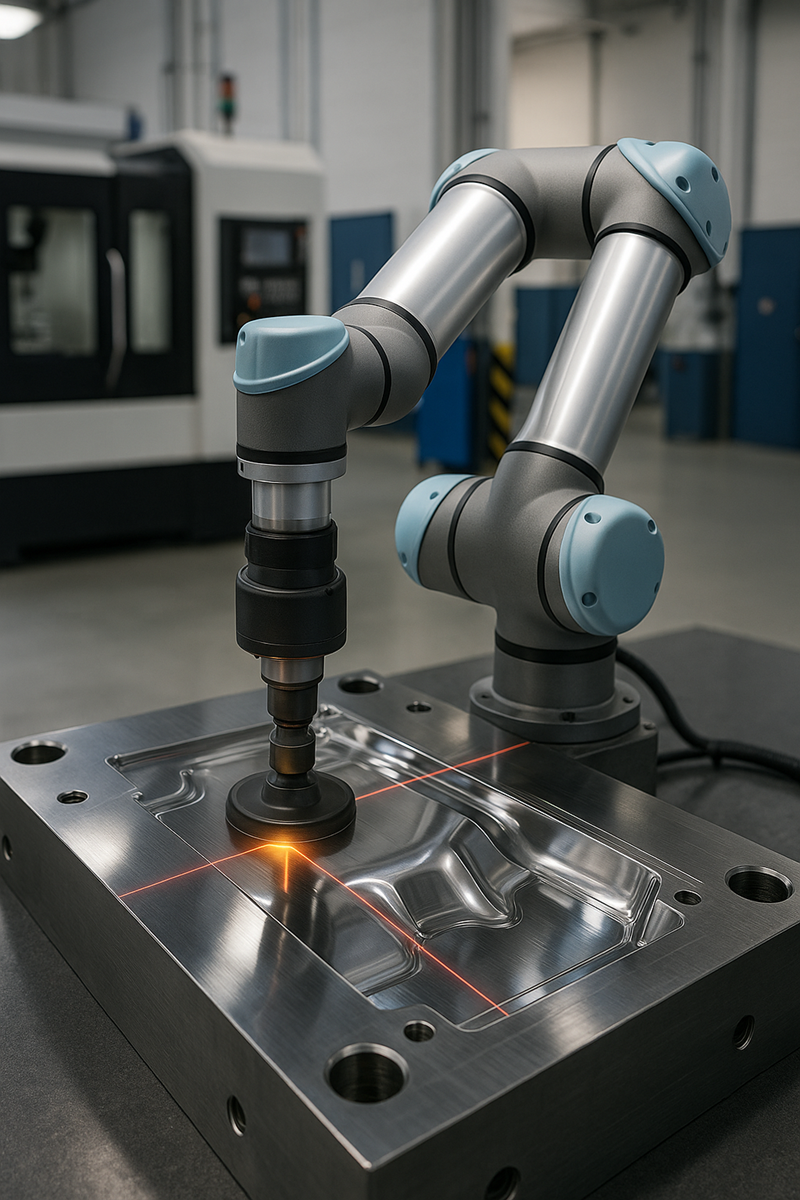
- Mold polishing and surface finishing, ensuring uniform quality.
- Tool loading/unloading in CNC machines, especially in high-mix, low-volume environments.
- Handling and transporting heavy molds safely, reducing the need for cranes or dual-operator lifts.
- Quality inspection tasks using vision-equipped cobots, which can consistently detect defects and measure tolerances.
6. What Are the Benefits of Using Cobots in Mold Manufacturing?
Implementing cobots yields multifaceted benefits:
- Increased productivity with consistent output, especially for repetitive tasks.
- Improved worker safety and reduced fatigue, particularly in physically intensive operations.
- Better use of skilled labor for high-value tasks, such as design and complex assembly.
- Faster cycle times and reduced downtime, increasing bandwidth.
These benefits form the core of the benefits of collaborative robots in mold manufacturing give a competitive advantage.
7. Are Cobots a Cost-Effective Investment for Mold Shops?
Cobots offer a cost-effective path to automation:
- While the initial investment may seem steep, long-term savings in labor and downtime often outweigh it.
- Calculating Cobot ROI in manufacturing should include direct labor savings, reduced scrap, and fewer accidents.
- Many mold shops report payback periods between 12 to 24 months, making cobots a viable financial choice.
8. How Can Mold Shops Successfully Integrate Cobots?
For mold shops looking to adopt cobots:
- Start small and scale with a pilot project in polishing or tool loading.
- Choose the right cobot based on payload, precision, and available workspace.
- Train staff to work confidently and safely with robots to ease the cultural shift.
Gradual implementation ensures smoother transitions and stronger long-term results.
9. What Does the Future Hold for Cobots in Tooling?
The next phase of collaborative robots in mold shops involves even smarter systems:
- AI-enhanced cobots will adapt in real time to different tasks and materials.
- Integration with Industry 4.0 systems will enable remote monitoring, traceability, and dynamic scheduling.
- Predictive maintenance capabilities will reduce unplanned downtimes and improve equipment lifespan.
10. Why Should Mold Shops Consider Cobots Now?
As mold shops face rising challenges and competitive pressure, collaborative robots in mold shops present a compelling solution. They address key pain points—labor, safety, and quality—while enabling a smarter, more efficient workflow.
With technology becoming more accessible and adaptable, now is the right time to consider cobots in mold shops. The future of tooling is collaborative, safe, and highly productive.
11. Conclusion
The rise of collaborative robots in mold shops marks a pivotal shift in how modern tooling operations function. From solving acute labor shortages to enhancing precision and safety, cobots deliver measurable benefits across the shop floor. Whether deployed in polishing, mold handling, or inspection tasks, cobots help mold makers stay competitive in a rapidly evolving manufacturing landscape.
By offering fast ROI, minimal integration disruption, and compatibility with existing workflows, cobots aren’t just a future concept—they are a practical, scalable solution available today. As advancements in AI and Industry 4.0 continue to unfold, their role in mold manufacturing will only expand.
Collaborative robots in mold shops represent the perfect blend of human ingenuity and robotic precision—delivering productivity without compromising safety. As mold shops face rising challenges and competitive pressure, collaborative robots in mold shops present a compelling solution. They address key pain points—labor, safety, and quality—while enabling a smarter, more efficient workflow.
With technology becoming more accessible and adaptable, now is the right time to consider cobots in mold shops. The future of tooling is collaborative, safe, and highly productive.